LOCATION AND ACCESS
This seven-century-old hydraulic work is located about 6 km. from the town of Guadalupe. It can be reached by the road from Guadalupe to Navalmoral de la Mata and then by a forest track that leaves from the hill of the Ermita del Humilladero in a westerly direction.
ATTRACTIONS OF THE VISIT
This hydraulic work has the following parts:
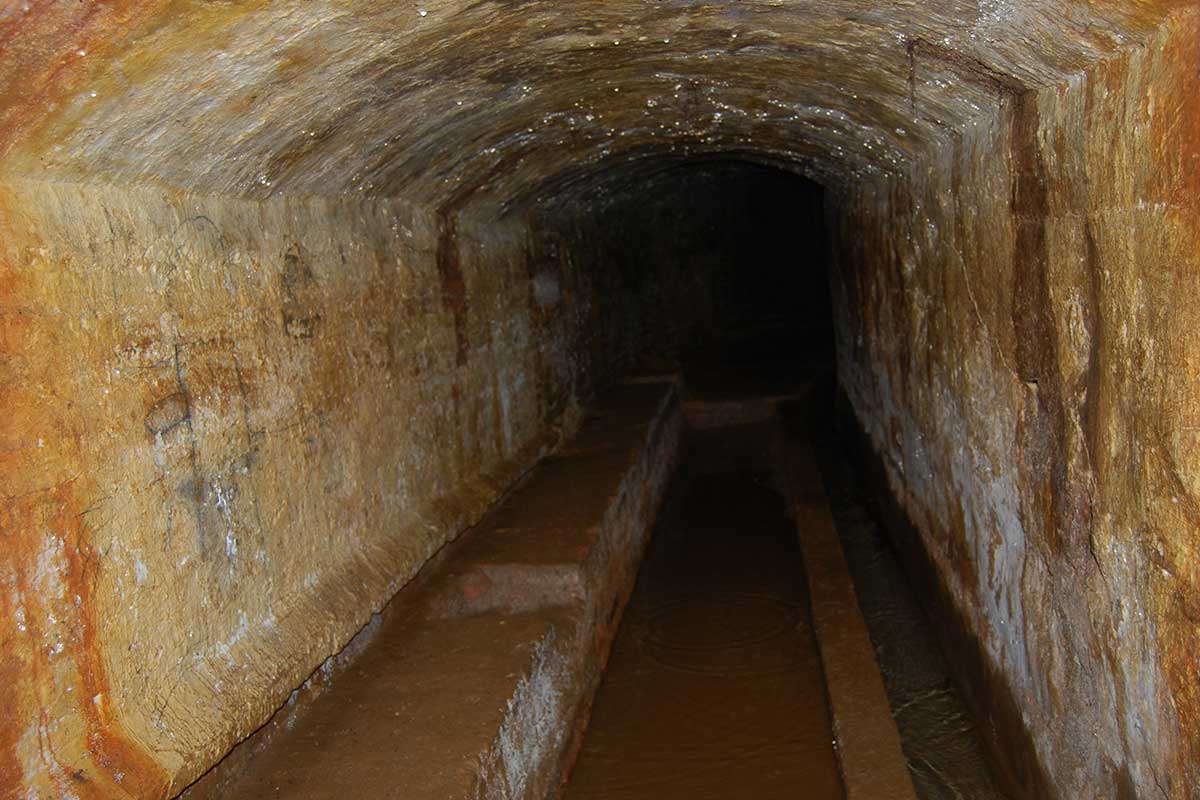
Main catchment: A network of drainage galleries or “water mines”, excavated on the southeast slope of La Villuerca, connected to the springs or “manaeros” that emerge from the fractures in the quartzite and slate rocks.
Storage: The ‘mines’ concentrate the water in vaulted deposit with point arches made of granite stones, known as the ‘Arca del Agua’ (Water Ark). Part of it is above ground but the part occupied by the water is dug into the ground.
Treatment: By decantation of the water collected in the Arca del Agua and in the adjoining “arquilla”.
Piping: Made with tongue-and-groove ceramic pipes with several factory-made “vents”, which eliminate air from the piping and regulate the water pressure to the urban centre of Guadalupe. Distribution network to the numerous fountains in the village, orchards and the Monastery of Guadalupe.
It is one of the most interesting cultural assets of Guadalupe, it was built by the Hieronymite monks taking advantage of a hydrogeological resource. It is a system for the collection, conduction and distribution of drinking water by gravity for the Monastery and village of Guadalupe, known as the Arca del Agua (Water Ark). It dates back to 1350 and is still in operation today with slight modifications to its original structure.
GEOLOGICAL INTERPRETATION