FAUNA
Abandoned mines, disused tunnels, and natural caves serve as the best shelters for bats—animals that play a vital role in population control by feeding on insects, thereby helping to prevent the emergence of certain pests. Conserving bat species requires maintaining their natural or artificial roosts in good condition.
Up to four species of bats can be found at Alto de San Blas. Of particular note is a large breeding and overwintering colony of the Mediterranean horseshoe bat (*Rhinolophus mehelyi*). During the hibernation or overwintering period, the site hosts colonies of the greater horseshoe bat (*Rhinolophus ferrumequinum*) and the Schreiber’s bent-winged bat (*Miniopterus schreibersii*). Finally, there is also a notable breeding colony of the greater mouse-eared bat (*Myotis myotis*).
GEOLOGY
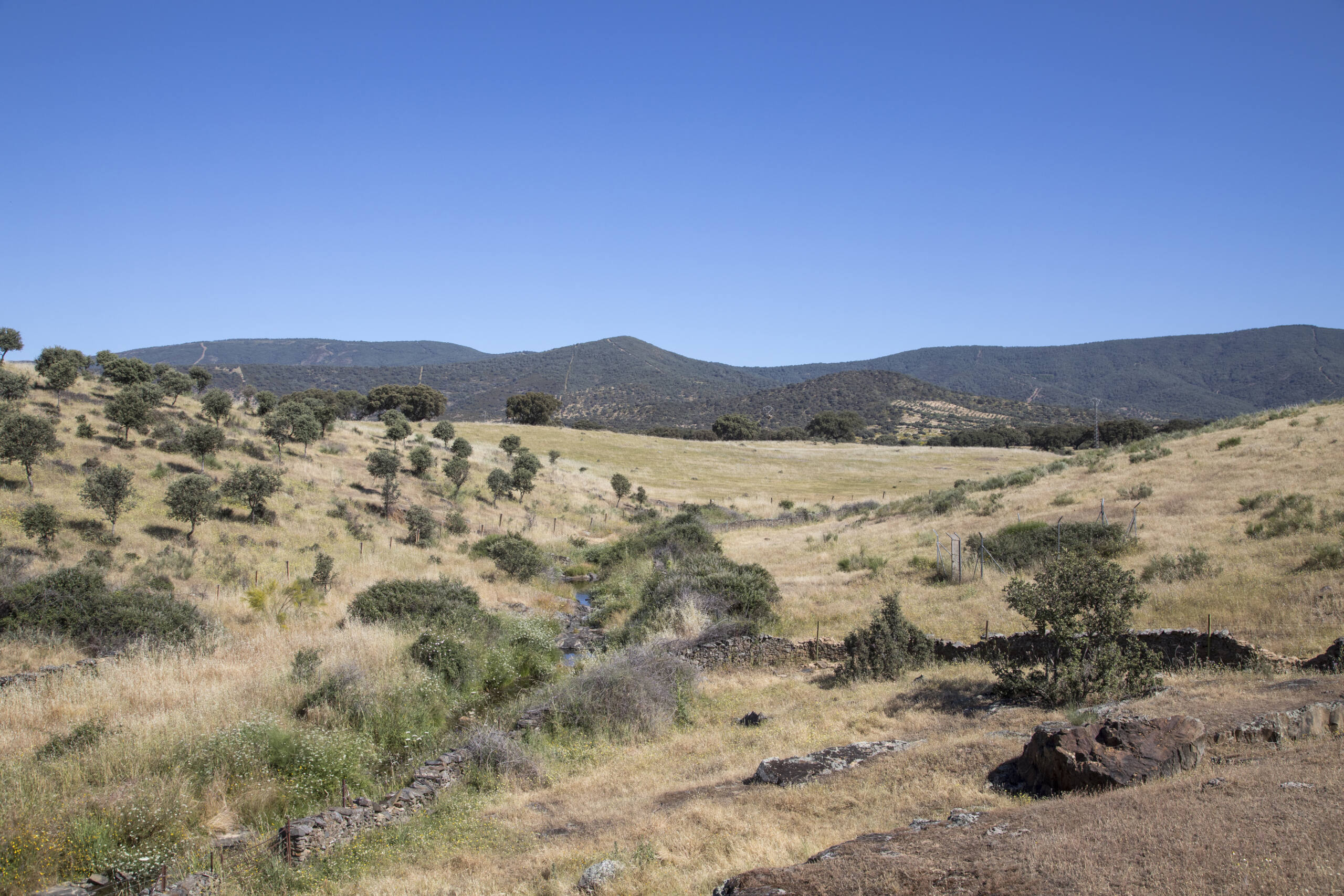
This shelter is located near the base of Cerro de San Cristóbal—also known as Sierra de San Cristóbal—an isolated hill rising to an altitude of 680 meters. It consists of a granite outcrop belonging to the Logrosán Batholith (or pluton). Granite is a plutonic rock formed deep within the Earth’s crust through the slow cooling of fluid magma. Excavations at the summit of the hill have revealed trenches, tunnels, and mining tools dating back to the late Bronze Age.
In the vicinity of granite batholiths, one often finds veins—faults filled with crystallized magmatic fluids—containing various minerals or rocks. A notable phosphorite vein can be seen at the Costanaza Mine, on the other side of the town; the site is open to visitors, offering access to one of its tunnels as well as an important Geological and Mining Museum. The phosphorite from Logrosán, which was extracted until the mid-20th century, was used to produce superphosphates that served as fertilizer for crops across much of Europe.