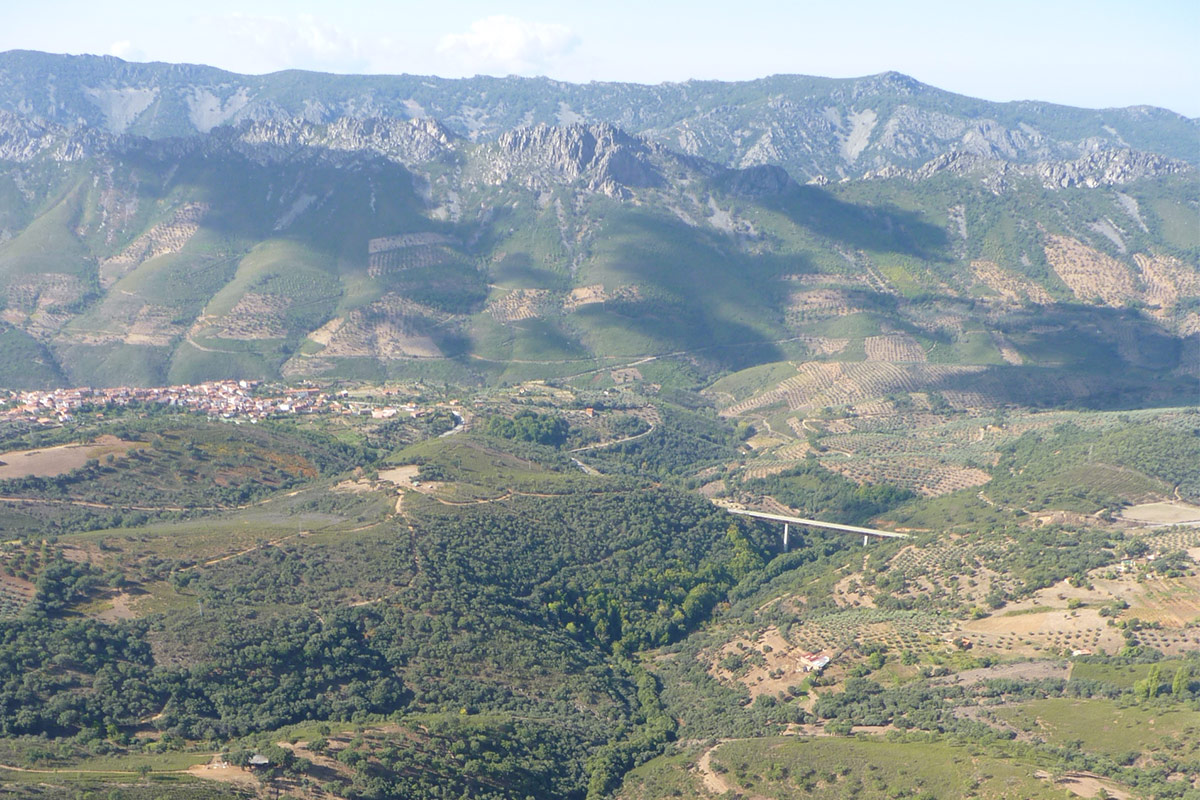
Geocentros is the name of the educational project for the Villuercas-Ibores-Jara Geopark. It is an educational intervention project that involves schools throughout the territory—as well as some outside of it—with the goal of bringing the region’s geological, natural, and cultural heritage closer to the educational community. In doing so, it transforms the Geopark into a vast experimental classroom and a space for learning and hands-on exploration. The initiative views education as a fundamental tool for understanding, valuing, and preserving heritage, while promoting active methodologies, environment-based learning, and cooperation among educational institutions. Information and communication technologies (ICT) serve as key tools in the project’s implementation.
Geocentros is a joint initiative of the Department of Education of the Regional Government of Extremadura (Junta de Extremadura), the Provincial Council of Cáceres (Diputación de Cáceres), and the University of Extremadura (UEx). Participating educational institutions include: grouped rural schools (*Centros Rurales Agrupados*), early childhood and primary schools, secondary schools, adult education centers, and the teacher and resource centers located in Trujillo and Navalmoral de la Mata. Furthermore, the project has been joined by the “Las Villuercas” Regional Association for People with Physical and Intellectual Disabilities (ASDIVI) and the Association for the Defense of Nature and Resources of Extremadura (ADENEX), both of which provide highly valuable contributions. More recently, the Tagus (*Tajo*) and Guadiana River Basin Authorities—along with their environmental education teams—the UEx Faculty of Sciences (in Badajoz), and projects under the ESCALA training and employment program (Dual Vocational Schools for Employment in Extremadura) have also joined the initiative.
Through the “Geocentros” (Geocentres) network, participating centers integrate the values of the Geopark into their educational projects and develop activities that connect curriculum content with the local territory. This experience enables students not only to acquire knowledge but also to develop a sense of belonging, responsibility, and involvement in the conservation of heritage.
This model can be adapted and expanded into the realms of non-formal and informal education, extending learning beyond the classroom to reach families, associations, tourism businesses, cultural organizations, and the local population. In this way, interpretation centers, geological routes, environmental education activities, workshops, fairs, festivals, public participation events, and citizen science initiatives become learning spaces linked to the Geopark.
Consequently, the “Geocentros” model can evolve into a territory-wide educational community, where various stakeholders share knowledge and experiences, contributing collectively to the conservation and promotion of heritage. Education is thus no longer viewed solely as a school-based activity; instead, it becomes a continuous process of learning, participation, and awareness-raising—one capable of fostering a citizenry more deeply committed to sustainable development and the values of the Geopark.