FLORA
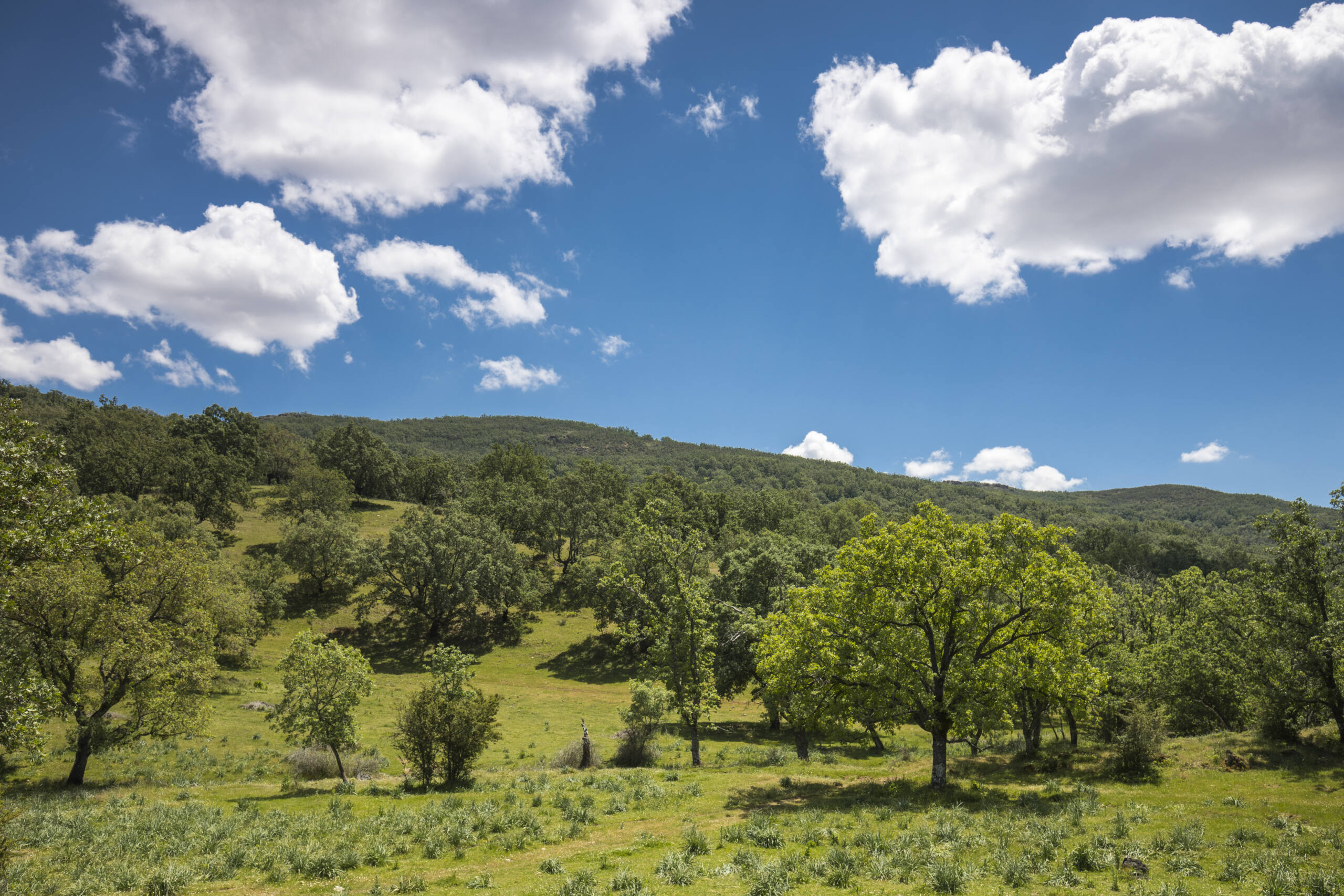
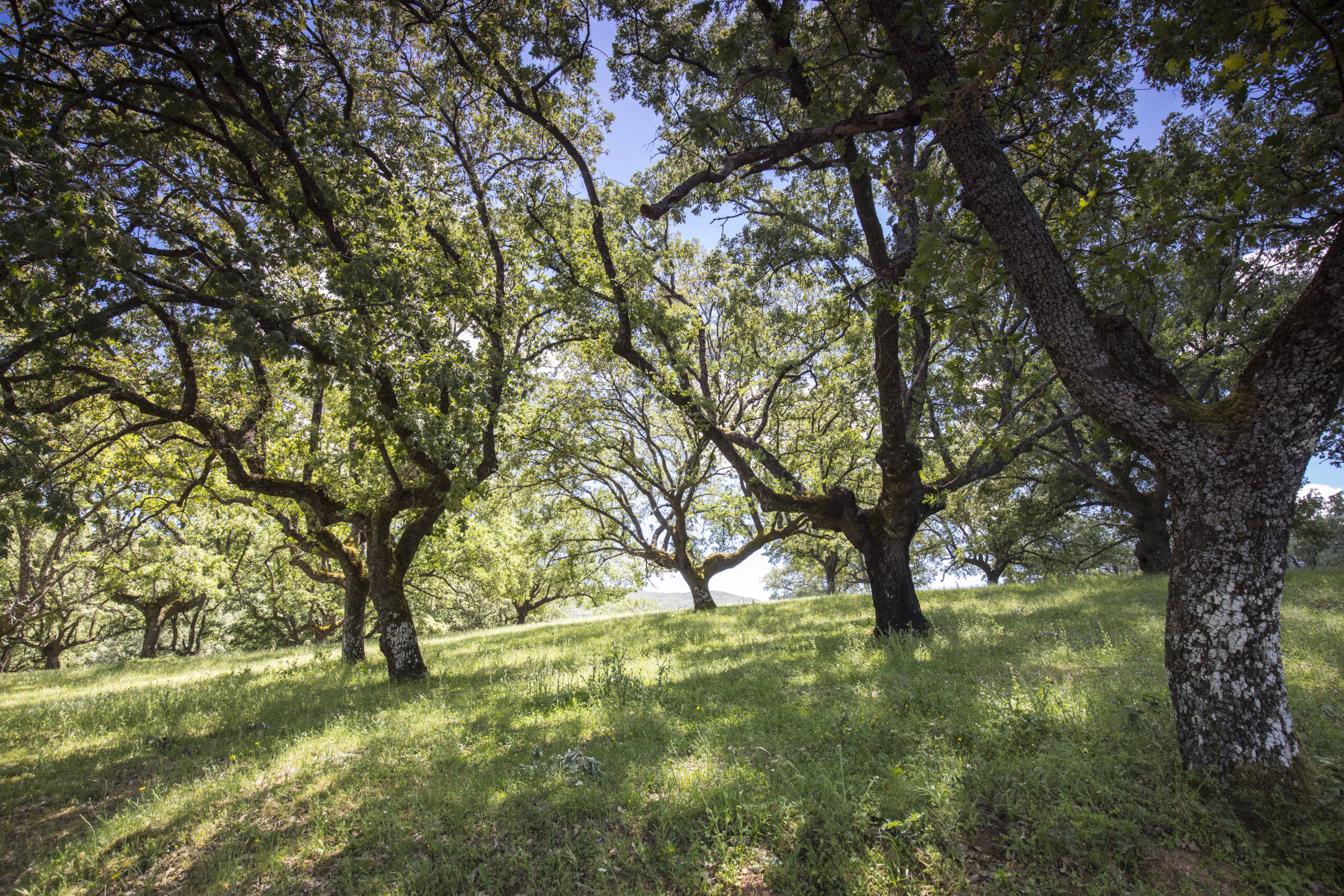
The surrounding area consists of deciduous forests of Pyrenean oak (*Quercus pyrenaica*), which, on the La Nava estate, take the form of *dehesa*—an open woodland landscape. These forests are home to magnificent oak specimens; in autumn, they lose their green hue, taking on shades of ochre and yellow that transform the landscape. Also present, though scattered, are wild service trees (*Sorbus torminalis*), whose leaves turn red in the autumn.
Among the herbaceous plants, numerous daffodils stand out—most notably *Narcissus pseudonarcissus* subsp. *portensis*. As this subspecies is extremely rare in Extremadura, it has been officially classified as being of “Special Interest.”
These wooded areas, with their thick layer of leaf litter, support the growth of many fungal species. Notable examples include edible mushrooms such as Caesar’s mushrooms (*Amanita caesarea*), various boletes (*Boletus aereus* and *B. edulis*), and the spring-fruiting chanterelles (*Cantharellus pallens*).