FLORA
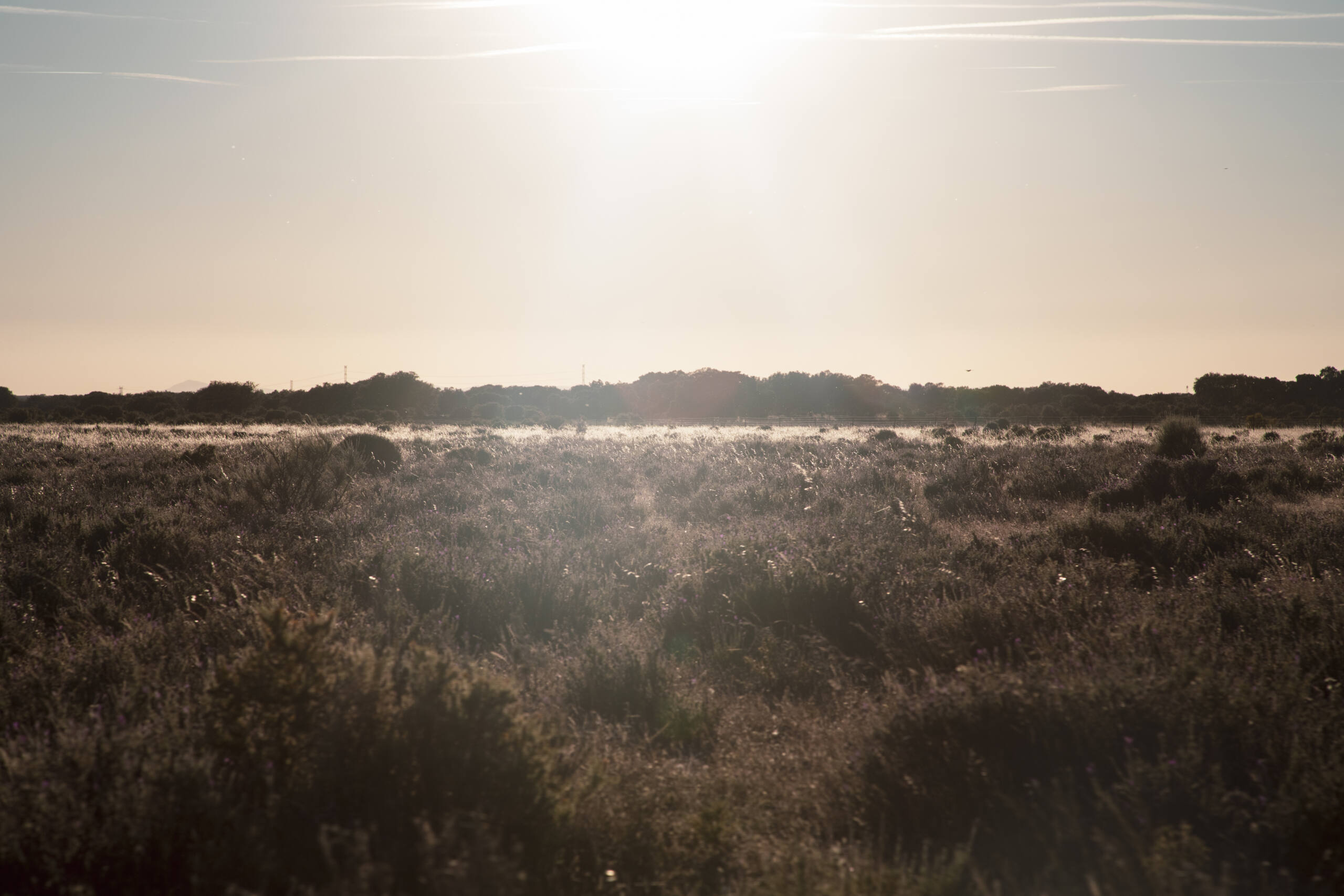
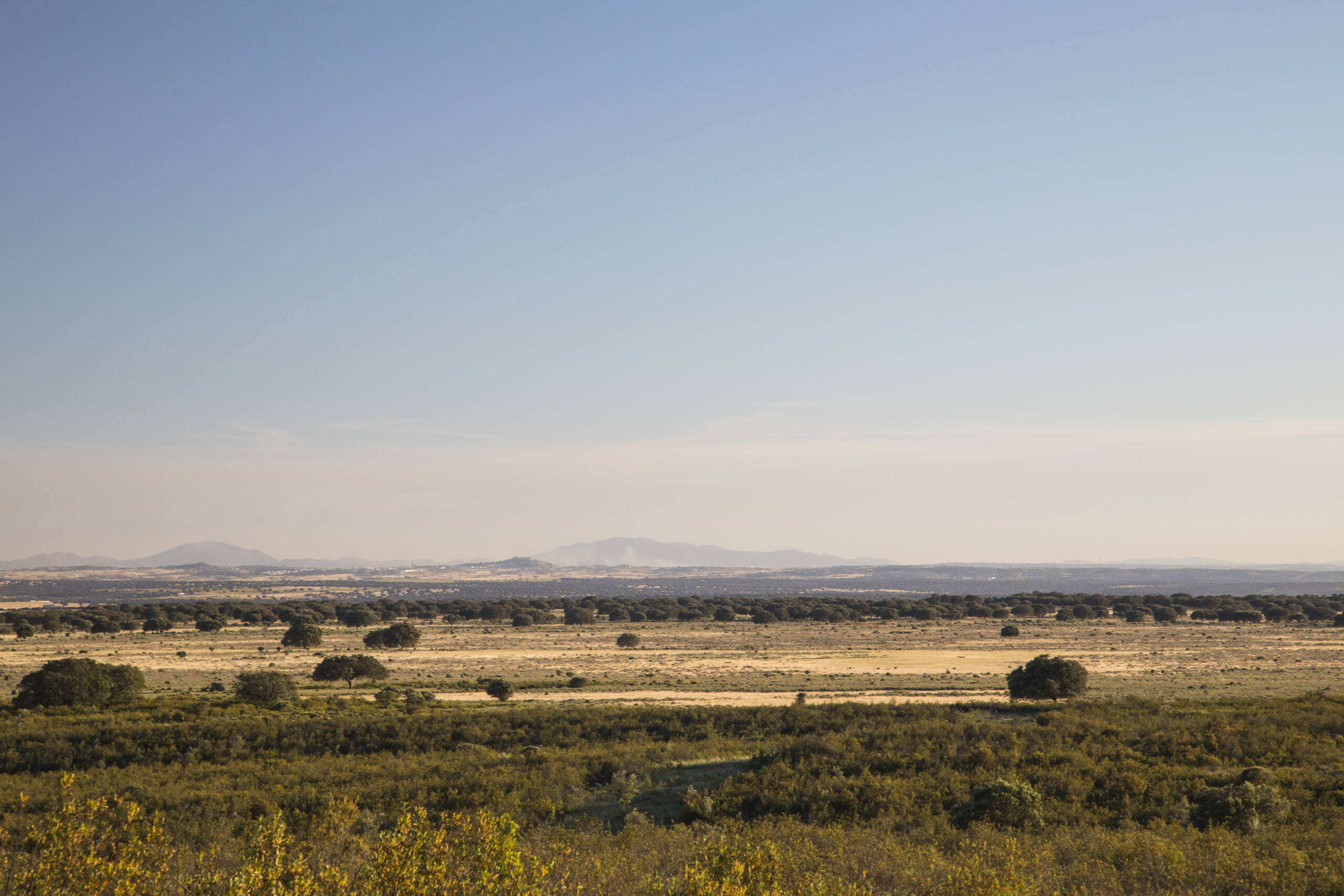
Regarding the vegetation in this area, it can be said that human activity has created a heterogeneous mosaic consisting of olive groves, *dehesa* (woodland with holm and cork oaks), scrubland, and pastures.
The *dehesa*—an open woodland featuring scattered holm and cork oaks—is the dominant human-influenced vegetation type in this *raña* (a characteristic type of plateau or plain). It is rich in scrub vegetation, including *Retama sphaerocarpa* (a type of broom), *Lavandula stoechas* (French lavender), *Genista hirsuta* (a species of gorse), *Genista tridentata*, and *Erica umbellata* (umbellate heath); in some places, there are also patches of *Cistus ladanifer* (labdanum rockrose) and various *Halimium* species.
FAUNA
Wildlife is abundant—let us not forget that we are at the gateway to Monfragüe National Park, an area where the Iberian imperial eagle, cinereous vulture, griffon vulture, and Egyptian vulture roam. Among the species characteristic of the *dehesa* (wooded pastureland) that we may encounter are the hoopoe, azure-winged magpie, common cuckoo, great spotted cuckoo, booted eagle, and various species of kite, among many others.
GEOLOGY
Near Deleitosa, in an area where the Geopark and the Monfragüe Biosphere Reserve converge, lies a magnificent example of a geological formation known as *raña*—deposits of material originating from nearby mountain ranges. As these deposits extend further from the mountains, they take the form of *páramos* or *mesas* (elevated, flat-topped platforms).
The *raña* of Deleitosa—locally known as “Mesas Caveras”—is situated between the Sierra de la Breña and the course of the Almonte River. Together with the *rañas* of Cañamero and Mesillas (in Castañar de Ibor), it represents one of the finest examples of this geological formation within the Geopark.
The Deleitosa *raña* originates from the nearby Sierra de la Breña, where a system of parallel fractures (faults) with transverse displacement is visible; this is clearly evidenced by the interruptions in the continuity of the quartzite ridges.
*Rañas* are piedmont deposits—typically in the form of alluvial fans—derived from adjacent mountain ranges. Their lithology consists of conglomerates, sands, gravels, and clays, generally characterized by a reddish-orange hue. They create tabular landforms, resembling mesas or elevated platforms that stand isolated within the landscape. Fluvial erosion along the edges of these deposits results in a distinctive lobed shape when viewed from above.