FLORA
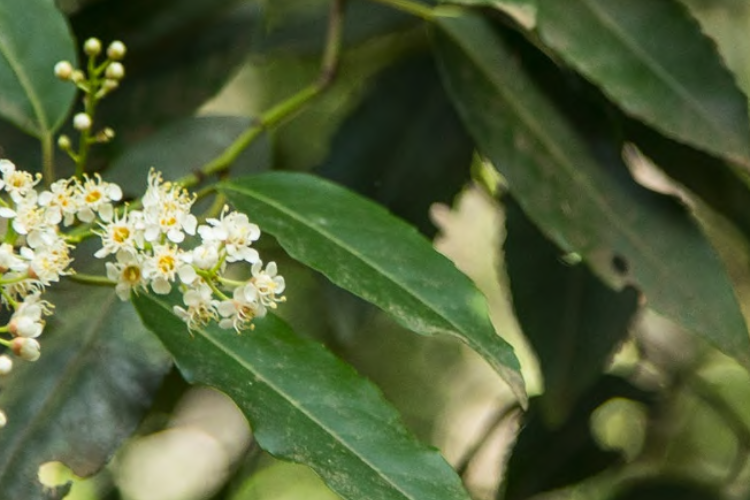
In the distant past—during the Tertiary period—the climate in this area was warm and humid, and much of the Mediterranean basin was covered by these laurel-like forests, of which the *loro* (Portuguese laurel, *Prunus lusitanica*) is a surviving remnant. Always found near watercourses, where it can access the necessary moisture, the *loro* stands out as the most intriguing and remarkable tree in the Geopark. It grows alongside species such as alders, ashes, hollies, strawberry trees, and laurustinus, as well as climbing plants like ivy and wild grapevines.
One should not leave the Hospital del Obispo area without visiting its peat bogs or marshy patches—waterlogged zones where, amidst *Sphagnum* mosses, one can find plants such as the insectivorous round-leaved sundew (*Drosera rotundifolia*). This plant uses sticky hairs to capture insects, which supplement its diet. These areas are also home to striking orchids, most notably *Dactylorhiza irenica*—a species first discovered within these peat bogs in the Villuercas region.
FAUNA
The rutting calls of red deer and the hoarse cries of roe deer—both occurring during the mating season—are among the natural spectacles that can be enjoyed in these mountainous landscapes. The dense riverside vegetation provides shelter for northern goshawks and Eurasian sparrowhawks, while the quartzite peaks are home to griffon vultures, large eagles (golden and Bonelli’s eagles), tawny owls, and Eurasian eagle-owls.
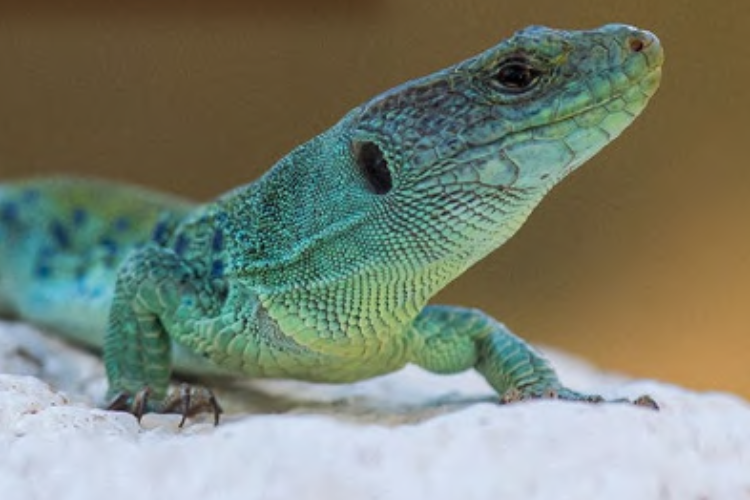
Among the hundreds of species that thrive here, notable examples include the wild boar, otter, Egyptian mongoose, Schreiber’s green lizard, and even the stag beetle. The avian population includes golden orioles, Eurasian jays, woodpeckers, and nightingales, whose flights and songs are sure to delight any visitor.
GEOLOGY
Between the Sierra del Hospital del Obispo and the Cerro Fortificado (which reaches an elevation of 1,424 meters above sea level) lies the well-known Hospital del Obispo valley—a historic route for travelers and pilgrims heading to Guadalupe via the *Camino Real de Castilla*. Covered in a dense forest of deciduous Pyrenean oaks (*rebollos*), the valley is traversed by a mountain stream—the *Garganta del Hospital del Obispo*—which cuts a deep gorge as it passes through the rock formations known as *Canchos del Ataque*.
This spectacular site features massive rock outcrops (*canchos*) tilted at a 45-degree angle; they form the southwestern flank of the Guadarranque syncline (and the northeastern edge of the now-eroded Ibor anticline). The stream’s waters descend through these narrow gaps, creating striking waterfalls. Once the water reaches flatter ground and its flow calms, it continues toward its confluence with the *Garganta del Mesto*. Along both watercourses, one can find magnificent examples of *laurisilva*—a type of laurel-like forest—featuring the Portuguese laurel cherry (*Prunus lusitanica*).