‘Paradise’ of Isabella the Catholic
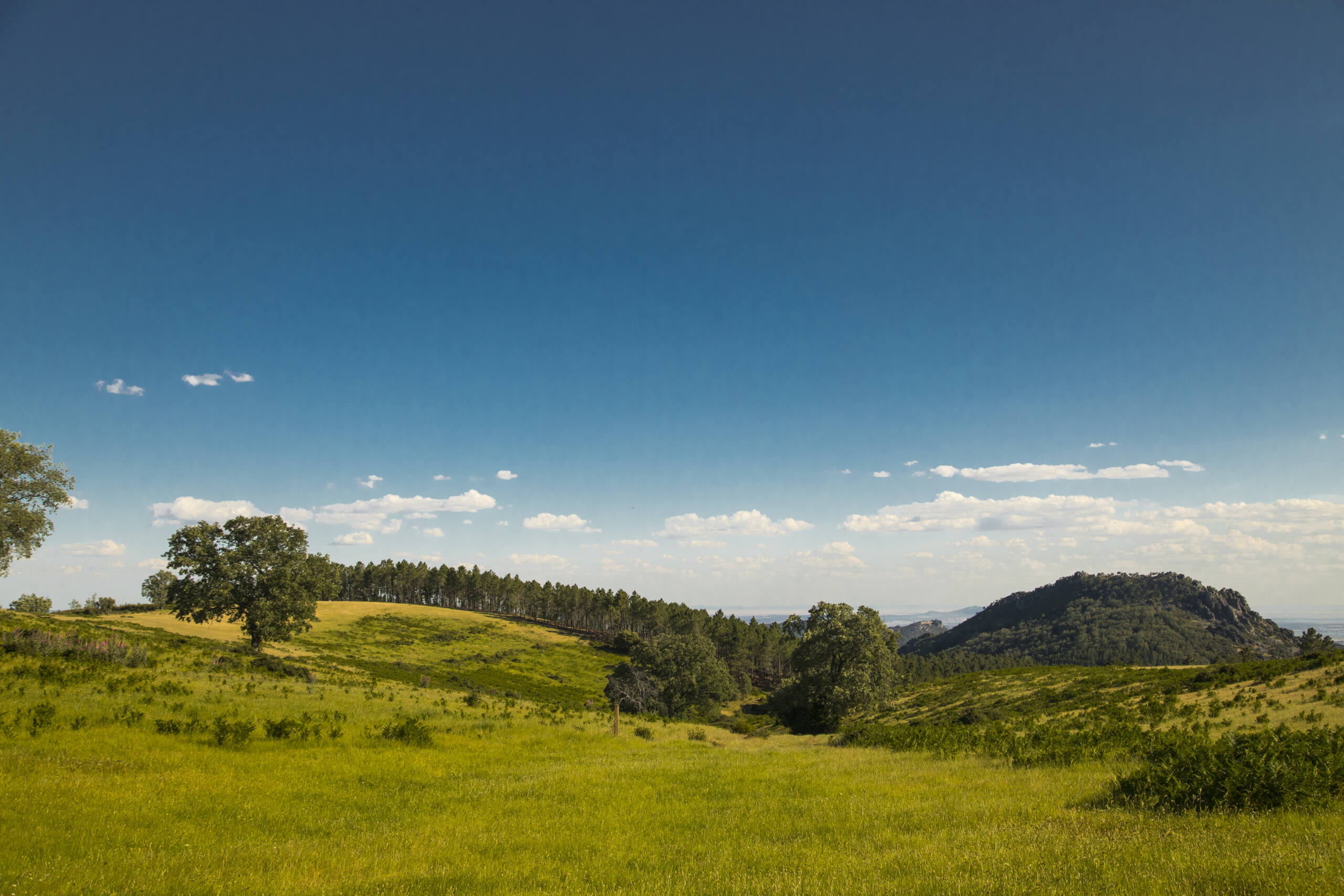
This is a mountain itinerary—a classic hiking route that follows an old bridle path once connecting the towns of Guadalupe and Cañamero. The trail presents a certain level of difficulty due to its elevation changes and sections crossing scree slopes; however, it traverses some of the most beautiful landscapes within the Villuercas-Ibores-Jara UNESCO Global Geopark.
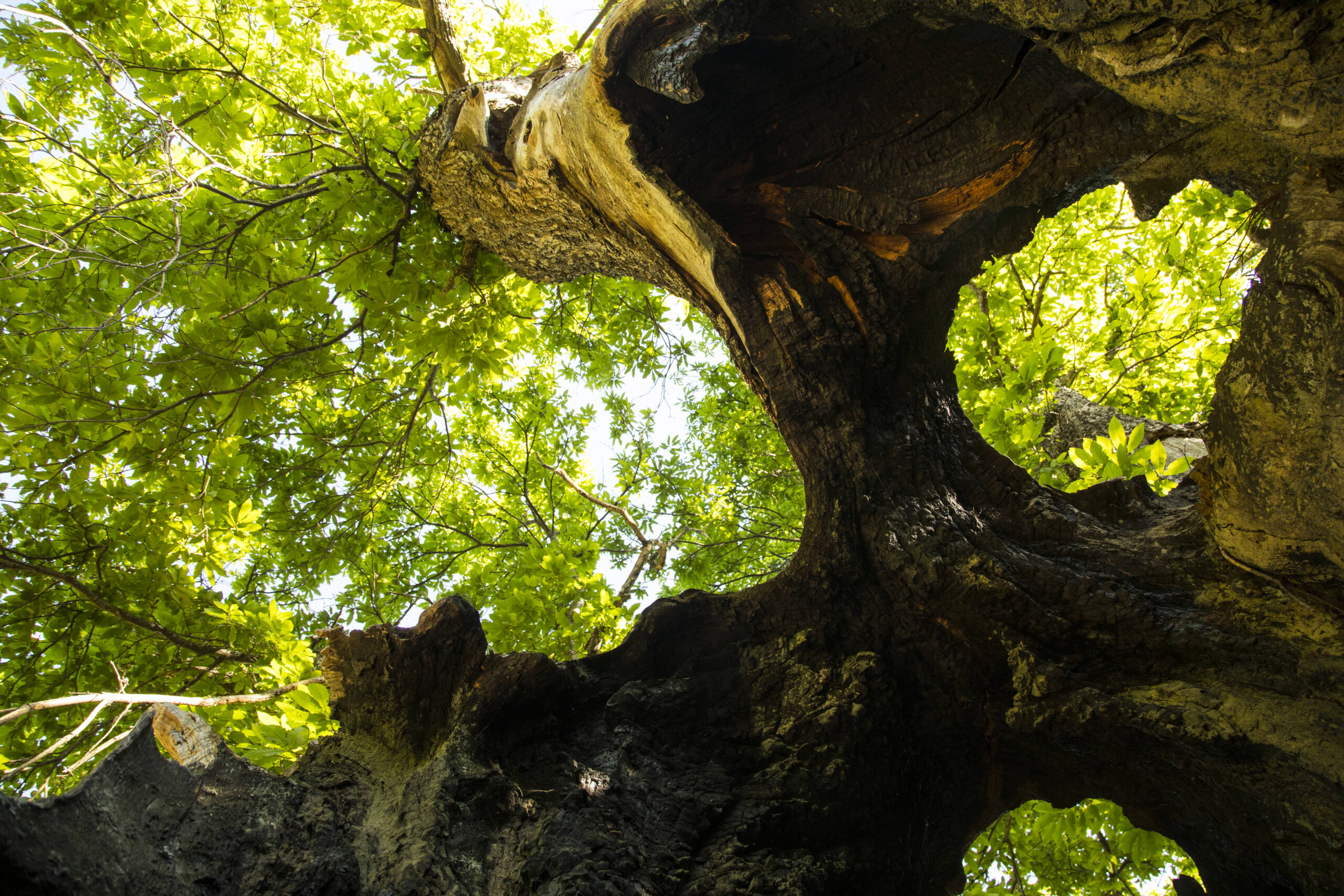
Between Cañamero and Guadalupe—along the well-known “Route of Isabella the Catholic”—stands a magnificent, ancient chestnut tree, known as *El Abuelo* (“The Grandfather”).
Located on a windswept ridge, within a beautiful, wooded setting near the hermitage of Mirabel, this chestnut tree has long been admired by kings and shepherds, writers and travelers alike.
Queen Isabella the Catholic referred to this area as “my paradise,” and the thinker Miguel de Unamuno wrote:
“We ascended via Mirabel and descended through one of the densest, most lush forests I have ever had the pleasure to experience. Never have I seen such gigantic, thick-canopied chestnut trees.”
As Unamuno aptly noted, the forests surrounding *El Abuelo* are indeed “lush and dense.” The primary, native woodland is a supramediterranean siliceous oak forest, dominated by the Pyrenean oak (*Quercus pyrenaica*), accompanied by wild service trees (*Sorbus torminalis*). Within this forest, the chestnut tree appears as a species that has been cultivated—or domesticated—by local inhabitants for centuries. Other species found in the area include alders, ashes, willows, and Portuguese laurels (*Prunus lusitanica*), while at lower elevations, one finds cork oaks, strawberry trees, and holm oaks.
Both the oaks and chestnut trees are deciduous; their fallen leaves create a rich forest floor, which abounds with fungi from genera such as *Amanita*, *Boletus*, *Russula*, *Lactarius*, and *Cantharellus*. The age of this chestnut tree (*Castanea sativa*) is unknown, but as early as 1353, there are written records concerning land boundaries and markers that refer to it as a “large tree.” It is undoubtedly over 800 years old and is now in its final stage, having even survived a lightning strike.