FLORA
The mountain ranges and valleys found between Berzocana, Logrosán, Garciaz, and Zorita offer one of the best examples of deciduous forest within the Geopark. Extensive green expanses are populated by Pyrenean oaks (*Quercus pyrenaica*), which reach the height of their scenic splendor in autumn, when the leaves of the mountain vegetation change color.
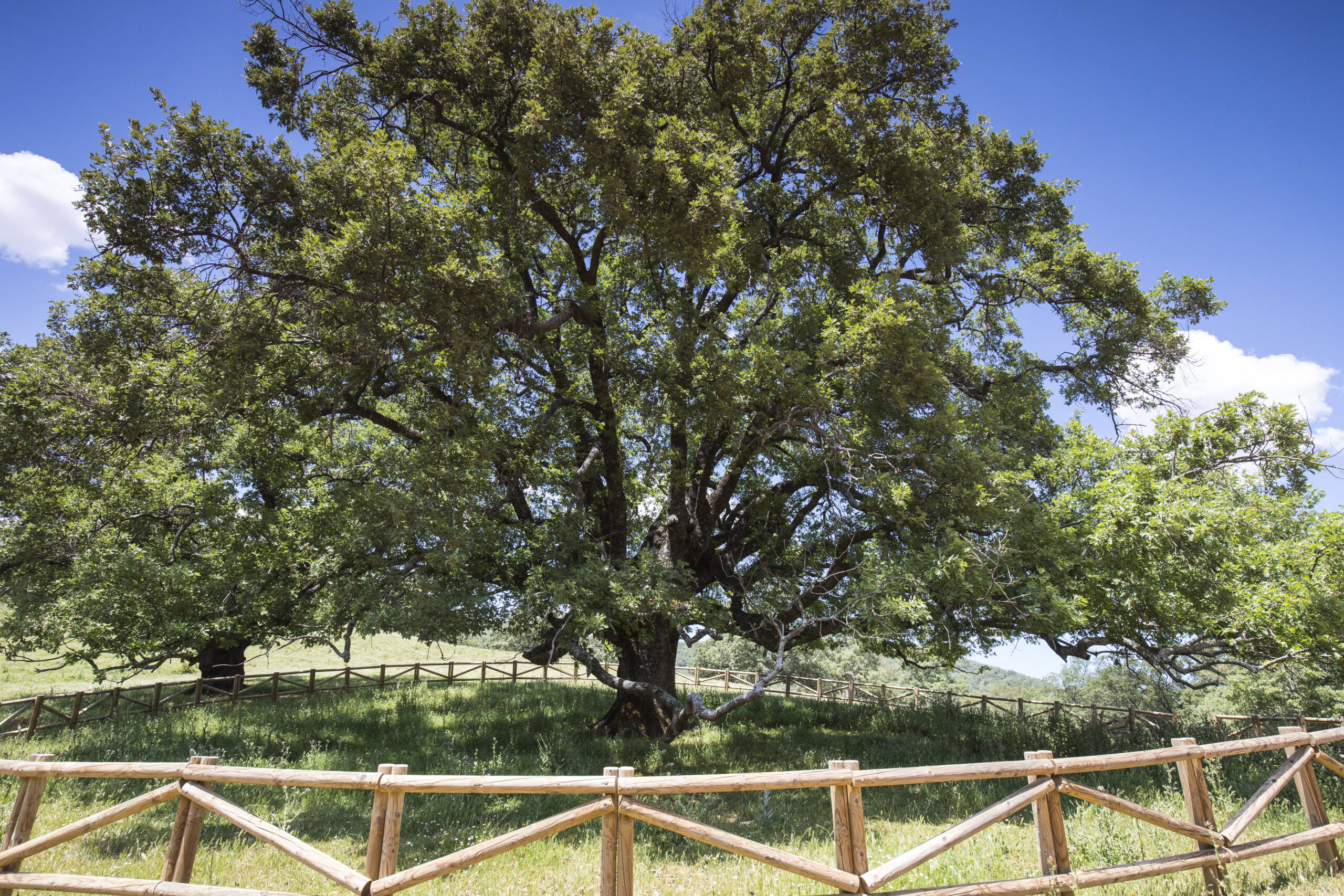
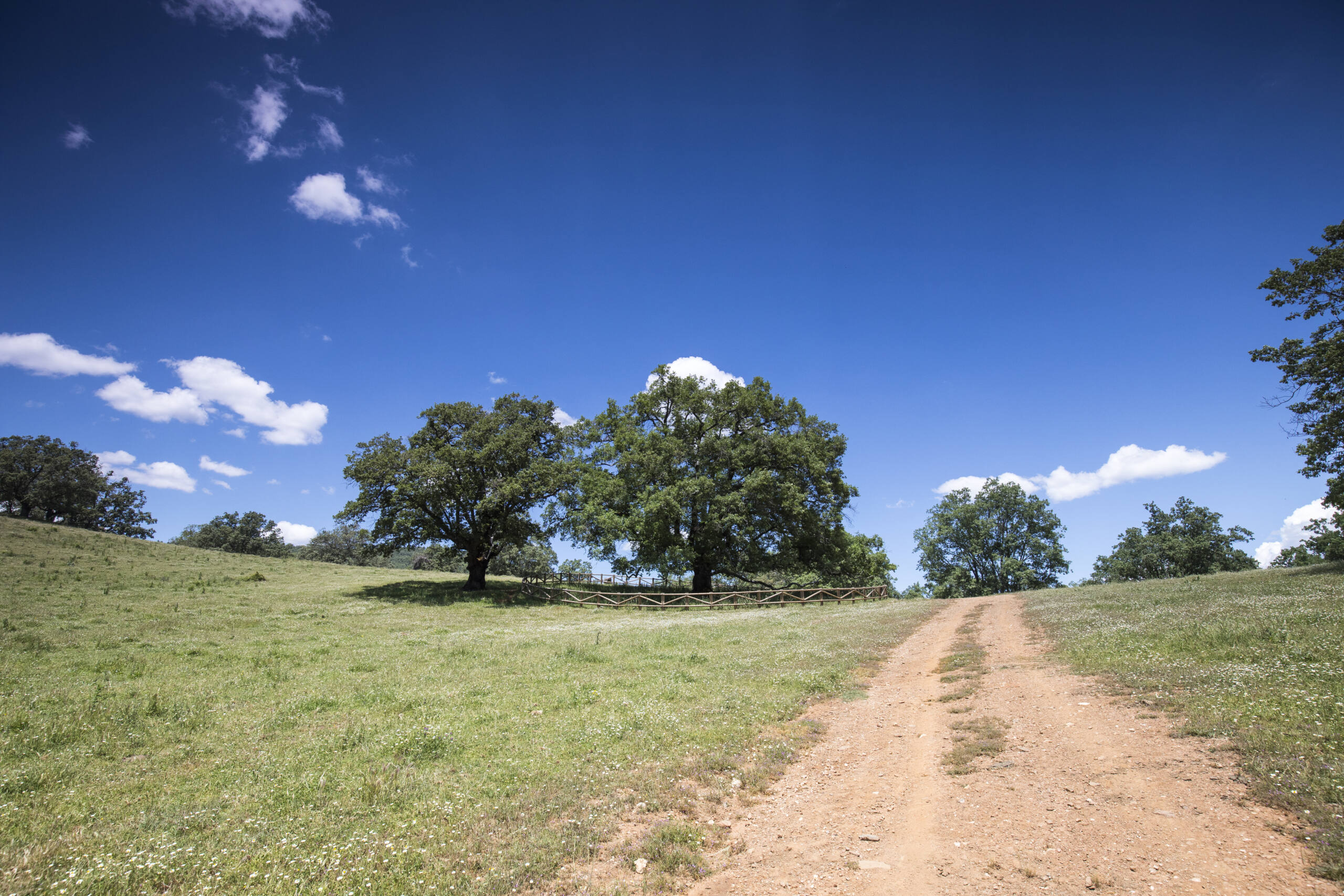
One of these oaks (*Quercus pyrenaica*) has grown to such a size that it has been given its own name and designated as one of the “Singular Trees” (notable or heritage trees) of Extremadura. Known as the “Roble de la Nava” (Oak of La Nava) or “Roble de la Maribela” (Oak of La Maribela), this specimen stands out within the wooded pastureland (*dehesa*) located next to the La Nava stream.
Estimated to be around 400 years old, this tree stands 20 meters tall and has a circumference of 4.55 meters. The slope of the terrain has forced the tree to develop buttresses at its base, revealing part of its root system. One of its branches grows downward, reaching close to the ground.
In some areas of the Villuercas region, these oaks have been managed and pruned in the same manner as holm oaks—a practice typical of *dehesa* (wooded pasture) systems. As a result of this treatment, the Roble de la Nava exhibits a remarkably wide horizontal spread of its branches, with one branch extending far downward toward the ground. Its condition is good, considering its age; there are no signs of significant decay or major wounds, and it displays dense foliage and abundant fruit production.
Among the flora found in the oak forests of these mountain ranges, daffodils are particularly abundant—most notably the rare *Narcissus pseudonarcissus* subsp. *portensis*.