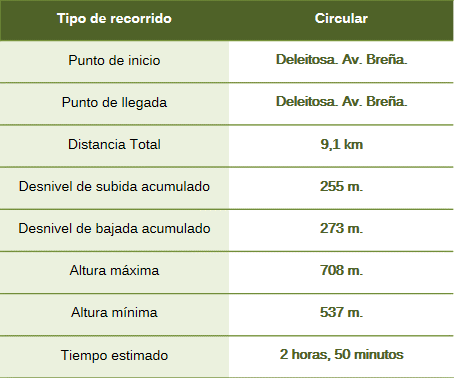
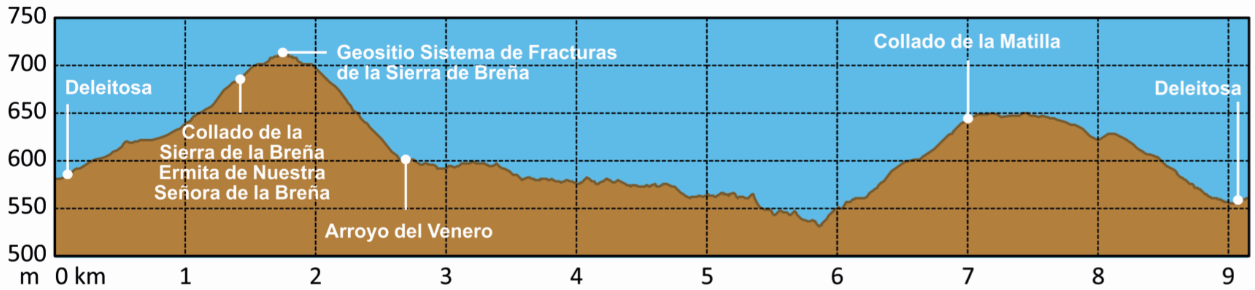
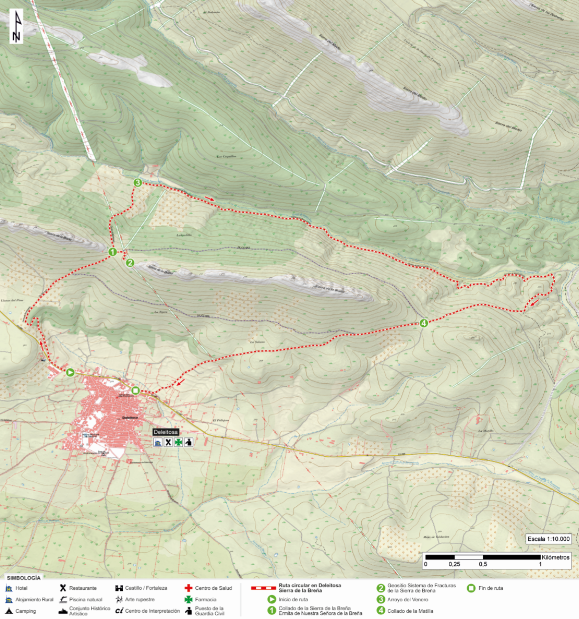
The route begins on Avenida de Nuestra Señora de la Breña (road EX-386) by taking the Romangordo path that branches off to the right. We continue along this path—sharing the route with the SL-CC 42 “La Breña” trail—as it ascends northward to the saddle of the Sierra de la Breña, eventually reaching the hermitage of the same name.
Here, the SL-CC 42 turns right, and our route crosses the mountain range, descending to the Venero stream; the path then turns right and follows the stream’s course along its shady slope. Shortly before the stream flows into the Garganta de los Batanes, the route heads southwest, climbing past the Sierra de la Breña—keeping it on the right—before beginning a descent that ends in the town, marking the route’s conclusion.
Griffon vultures, Egyptian vultures, and black storks can be spotted along the mountain ridges. Regarding flora, the range boasts great plant diversity, shaped primarily by slope orientation and the presence of microclimates. The shady slopes support mixed forests of chestnut, Pyrenean oak, and cork oak, alongside laurustinus, strawberry trees, and other shrub species typical of Mediterranean woodland. Holm oaks dominate the sunny slopes, while notable alder groves line the ravines.
A small valley here forms part of the Monfragüe Biosphere Reserve and is designated as a Special Protection Area (SPA) for birds.
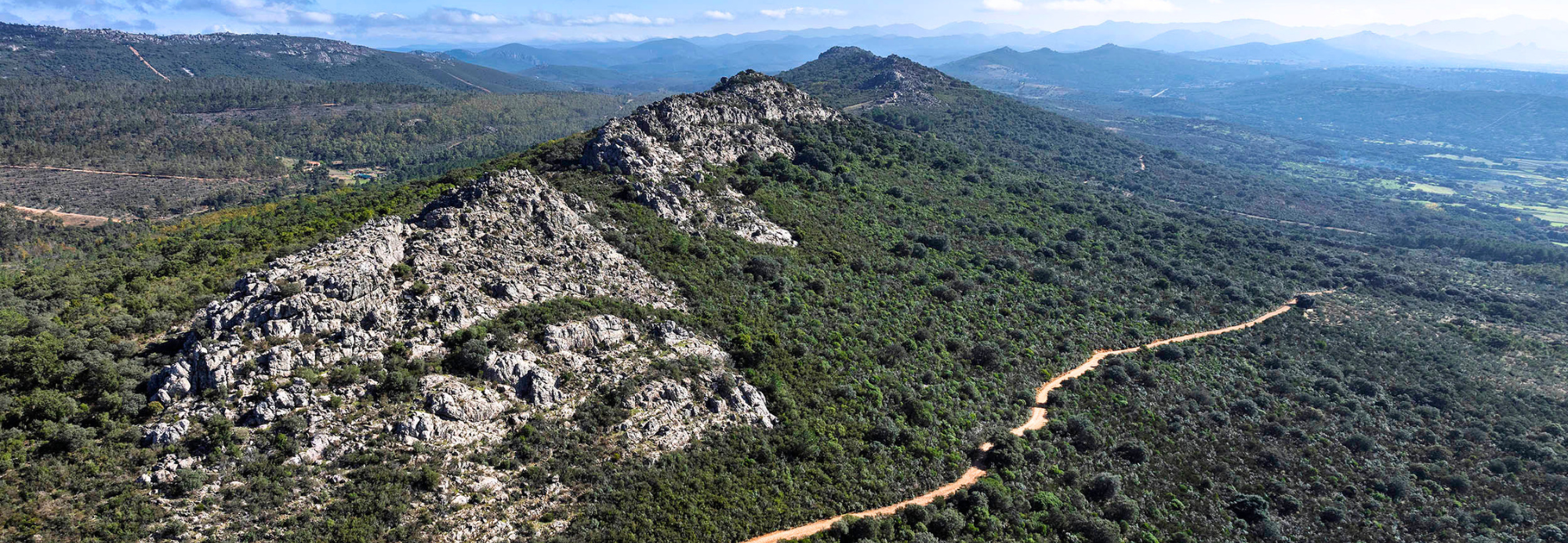
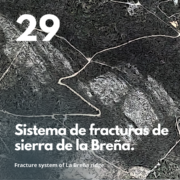
The Sierra de la Breña, located north of Deleitosa, is composed of the Armorican Formation—shallow-marine sands dating back to the Ordovician period (470 million years ago). These form hard, resistant rocks that outcrop above softer materials—specifically shales and greywackes—from the late Ediacaran period (550 million years ago). Differential erosion acting on materials of varying hardness has shaped the landscape, creating distinctive features such as scree slopes and *rañas* (alluvial fan deposits). Intense deformation caused by the Variscan and Alpine orogenies has resulted in folding and fracturing; many of these fractures appear as a system of parallel, horizontal faults that shift in unison, much like falling dominoes. This landscape bears witness to millions of years of geological evolution and erosional shaping. At certain outcrops, fossilized traces and burrows—most notably *Skolithos* and *Cruziana*—can be observed.