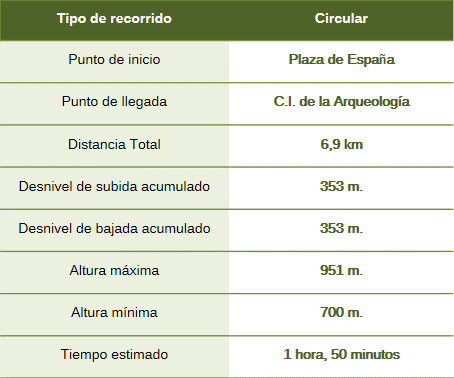
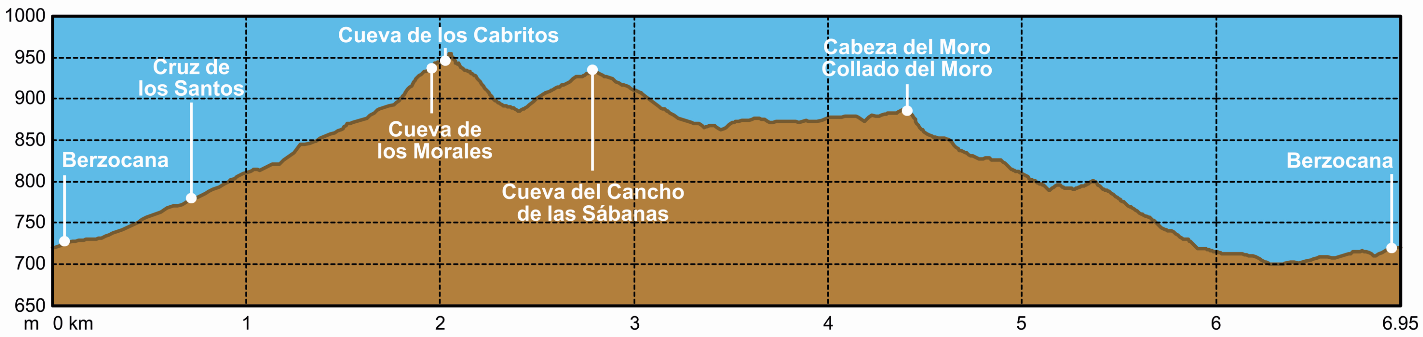
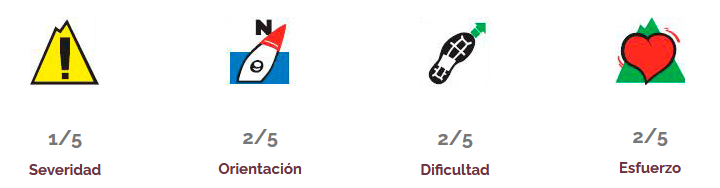
This route leads to Canchos de Las Sábanas, one of the geopark’s most notable geosites; it is home to three rock shelters containing rock art, which form the area’s main attraction. The hike is relatively short but somewhat demanding due to steep elevation changes and uneven terrain featuring areas of loose rock.
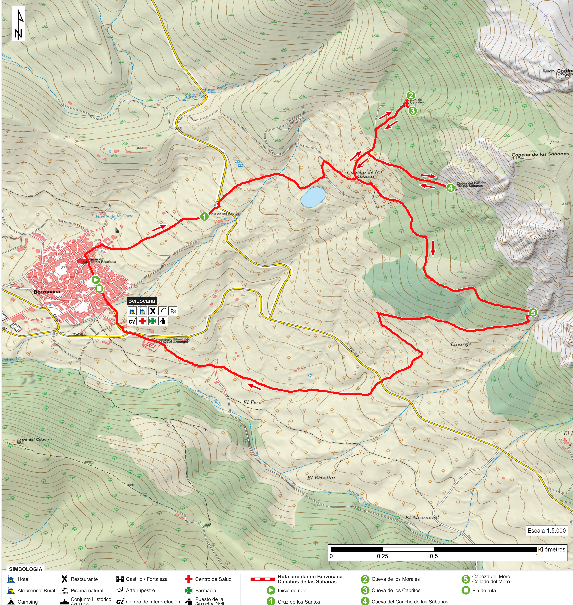
The route begins at Plaza de España, climbs to the Church of San Juan Bautista via Calle Cervantes, and leaves the town along Calle Carretas. A short distance ahead, on the right, we come across the Cruz de los Santos (Cross of the Saints). Shortly after, the route crosses a road and continues to ascend toward the farmhouse at the La Sierra estate along a well-maintained dirt track. This section passes through a mixed forest of Pyrenean oaks, cork oaks, and chestnut trees. Beyond the farmhouse, the path begins to climb more steeply, narrowing into a trail that leads up to the Los Morales and Los Cabritos rock shelters. We descend along the same path and, before reaching the farmhouse, take a left turn onto a track leading to the Canchos de Las Sábanas shelter; this site is located at the base of the *canchos*—imposing rock outcrops belonging to the Armorican Quartzite Formation. These three cavities, along with the Risquillo de Paulino site (located about 5 km south of Berzocana), make up the municipality’s collection of rock art sites, which date from the Chalcolithic to the Bronze Age (between 4000 and 1000 BC).
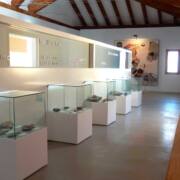
We return to the junction near the farmhouse and take the left-hand path heading toward the Collado del Moro (Moor’s Pass), where we can view the striking Cabeza del Moro (Moor’s Head), a rock formation belonging to the same Armorican Quartzite Formation. In this area, one can spot griffon vultures, peregrine falcons, Bonelli’s eagles, and Egyptian vultures. From this point, we continue our descent westward through the Linarejo area, passing through lush forests and sections of rugged terrain. We cross the CC-243 road and, passing between small farm plots, arrive back in Berzocana, marking the end of the route. In this town, we can visit the Archaeology Interpretation Center, the Church of San Juan Bautista, and the Hermitage of the Niño Jesús.
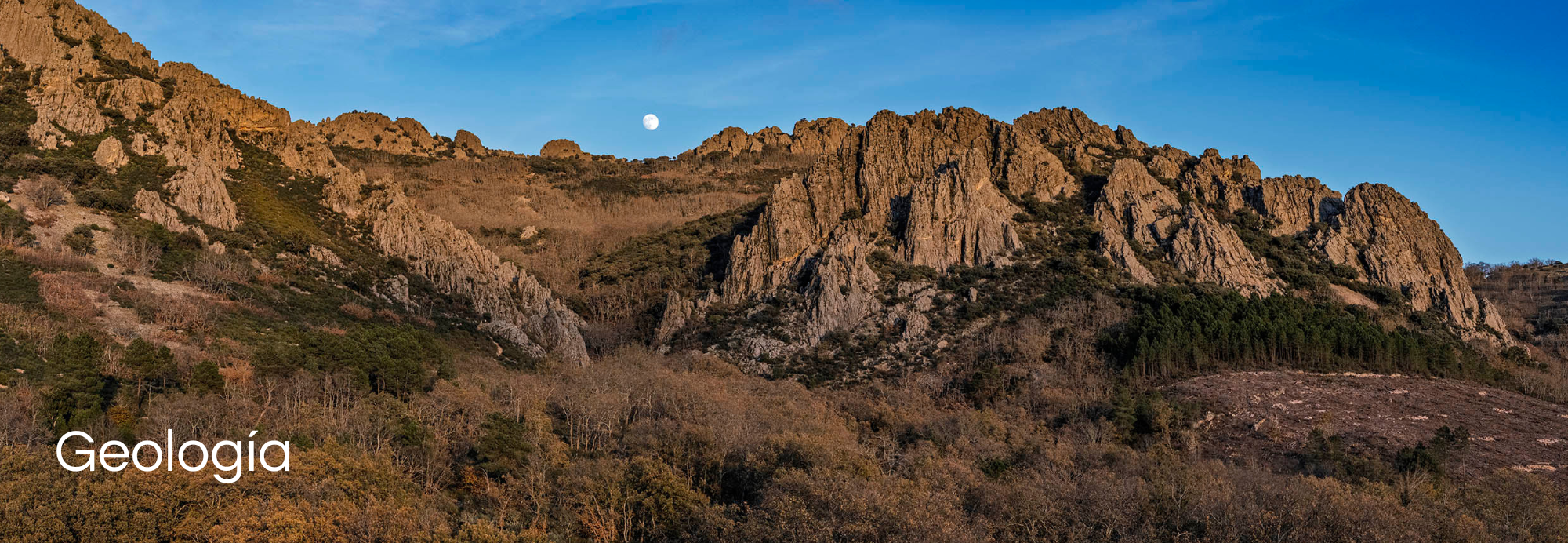
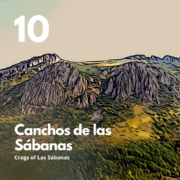
The “Canchos de Las Sábanas” are a prominent rock formation within the Sierra de Berzocana. They are composed of orthoquartzites from the Armorican Formation, originating from sands deposited on shallow seabeds during the Ordovician period (470 million years ago). Their distinctive shape and the near-vertical orientation of the strata are the result of tectonic movements that caused folding. In these rocks, one can observe evidence of ancient marine currents and wave action—such as ripple marks—as well as fossilized traces and burrows left by the organisms that inhabited those waters (primarily *Skolithos* and *Cruziana*). Humans also left traces of their presence in the form of rock paintings dating back to the Chalcolithic, or Copper Age.