FLORA
The surrounding vegetation consists of an open, park-like woodland of holm oaks (*Quercus ilex*), with an abundance of *Retama sphaerocarpa* and yellow-flowered common broom (*Cytisus scoparius*). Scattered among the rocks are European nettle trees (*Celtis australis*), cade junipers (*Juniperus oxycedrus*), and terebinth (*Pistacia terebinthus*), while in other areas, gum rockrose (*Cistus ladanifer*) predominates.
In nearby sunny, granitic areas, one finds scattered wild olive trees (*Olea sylvestris*) accompanied by an abundance of white-stemmed asparagus (*Asparagus albus*).
FAUNA
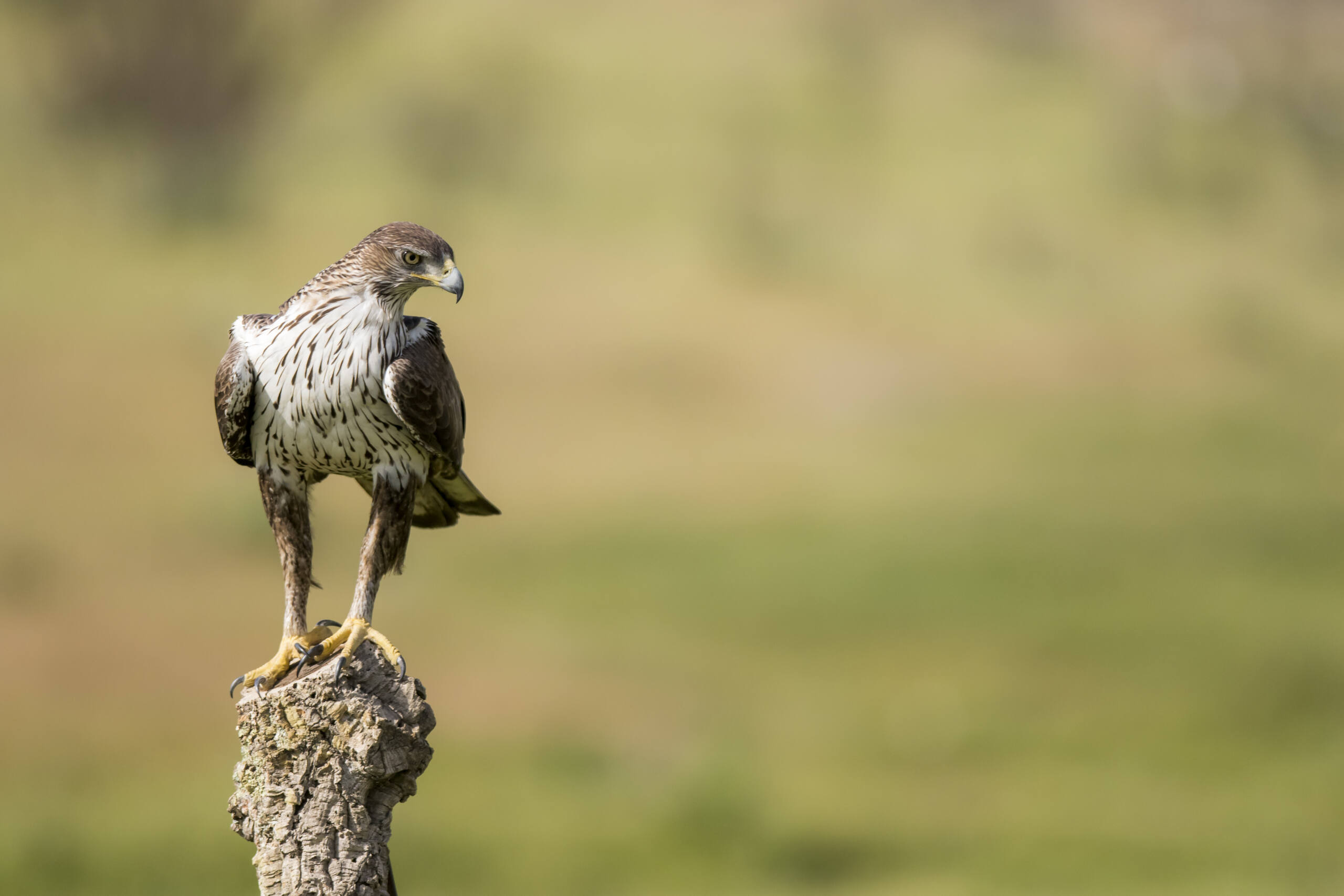
The fauna is typical of the *dehesa* (wooded pastureland), though the proximity of cliffs along the Tagus River makes these areas a hunting or foraging ground for cinereous, griffon, and Egyptian vultures; for various eagles—including the Spanish imperial, Bonelli’s, short-toed snake, and booted eagles—as well as for the Eurasian eagle-owl.
GEOLOGY
The formation of a granite boulder field—or *berrocal*—is the result of erosion (weathering) caused by chemical agents in the atmosphere acting upon granite bedrock. The end result is a landscape that feels both sculptural and magical, characterized by an abundance of granite boulders, mushroom-shaped rocks, small caves or rock shelters, balanced rock formations, and numerous fractures (known as joints).
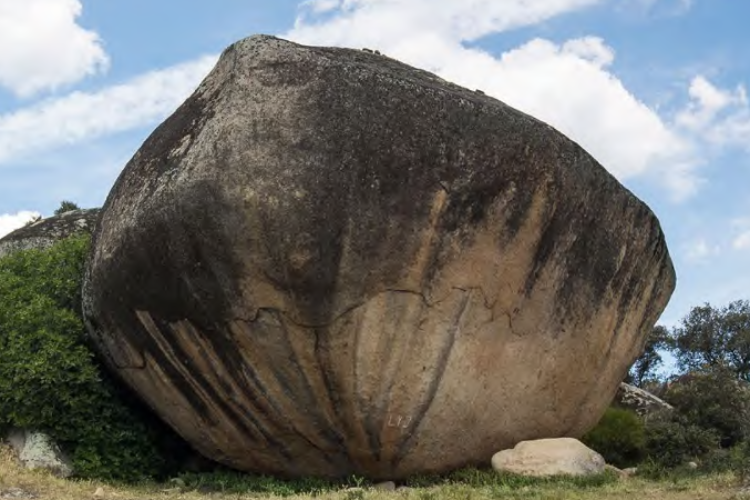
A trail starting from Peraleda de San Román leads to the main rock formation of this *berrocal*: the *Cancho Valdecastillo*. This colossal granite boulder—notable for its shape, which resembles the prow of a ship, and for its sheer size—has been known and visited since ancient times. Together with other nearby rocks, it forms a cavity that served not only as a shelter for shepherds but also as a sanctuary for the area’s ancient inhabitants. The rock carvings found here—including cup marks, anthropomorphic figures, and sun-like symbols—speak to a magical past, a time when this site served as a hub for ceremonies, gatherings, and rituals.