FLORA
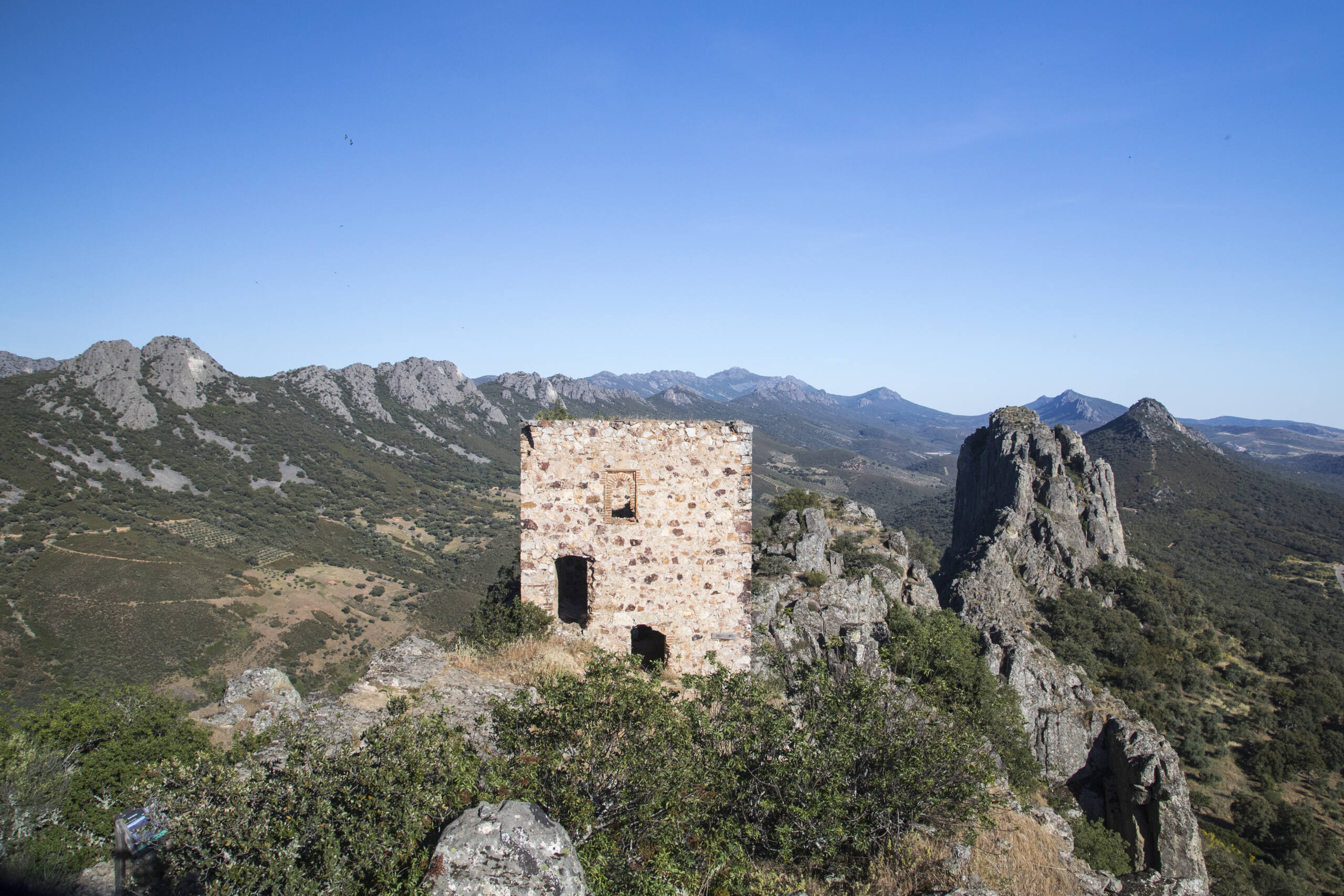
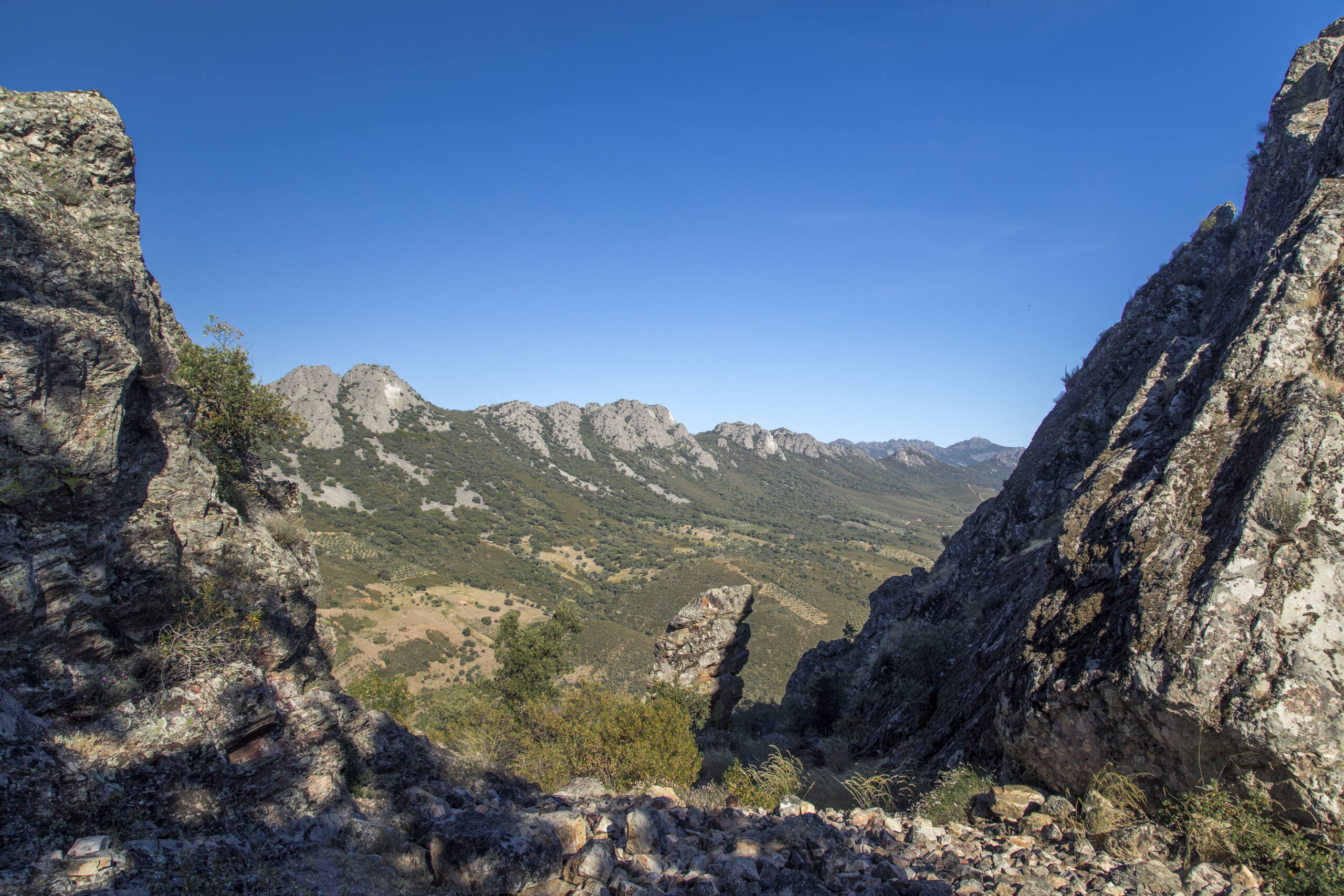
Evergreen Mediterranean woodland dominates this landscape; cork oak forests cover the hillsides, while *dehesas* (open wooded pastures) characterize the plains visible from the village. Every 9 to 10 years, cork is harvested from the cork oaks (*Quercus suber*)—a species that contributes immense ecological and economic value to the region.
In the shaded, cooler areas, the cork oaks are accompanied by Portuguese oaks (*Quercus faginea*), strawberry trees, laurustinus, tree heathers, and brooms, whereas the sun-drenched slopes are rich in rockroses and French lavender. Along the Garganta de Santa Lucía—which joins the Almonte River nearby in an area known as “Los Puentes” (named for the two bridges that span the respective watercourses)—one finds an abundance of alders, ashes, and willows, along with the occasional *loro* (Portuguese laurel).