FLORA
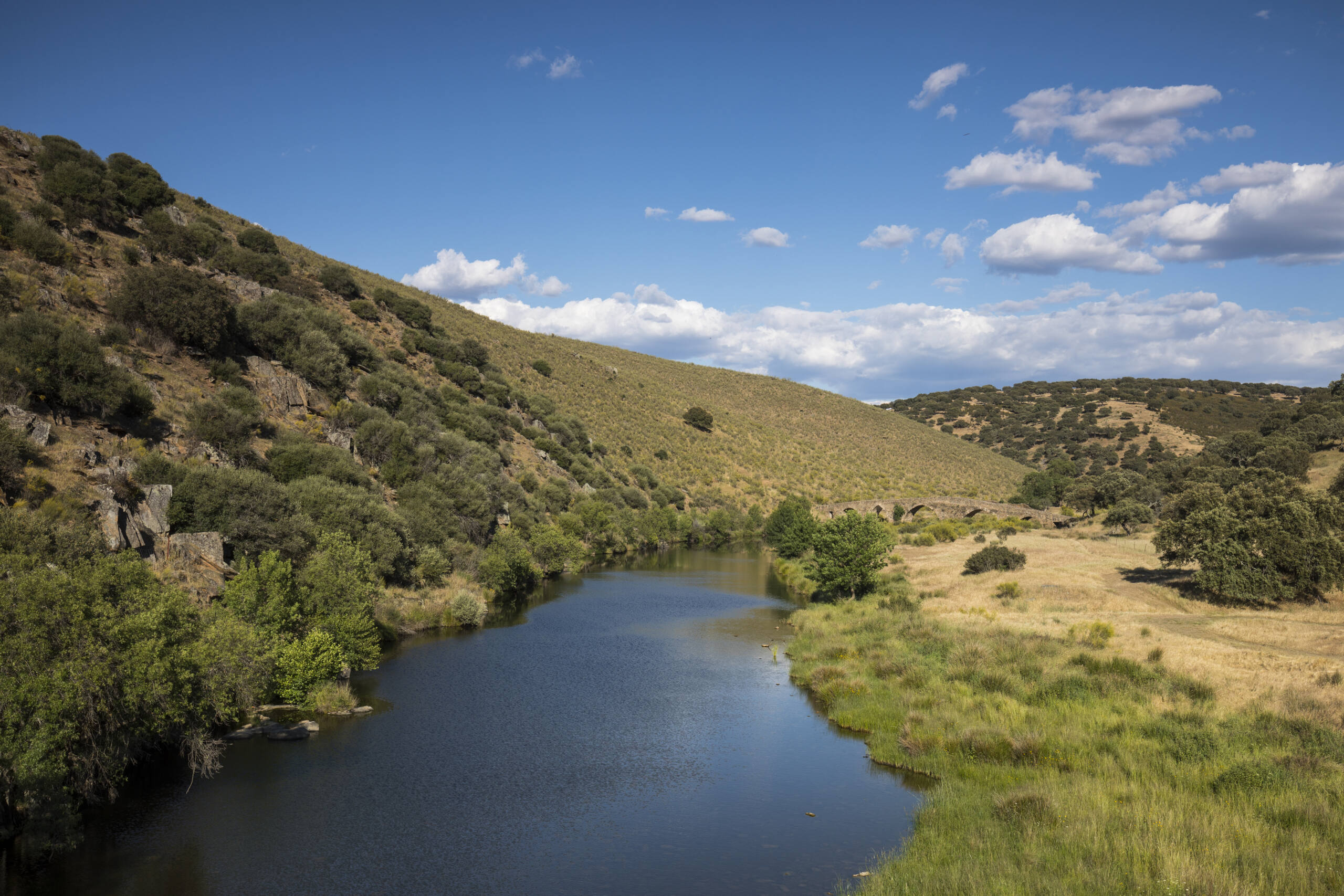
Here, deciduous forests in the higher elevations coexist with Mediterranean vegetation at lower altitudes. The dominant forest type consists of Pyrenean oaks (*Quercus pyrenaica*), accompanied by wild service trees (*Sorbus torminalis*) and another deciduous oak species, *Quercus broteroi*. Over the centuries, some oak-covered areas have been transformed into cultivated chestnut groves (*Castanea sativa*); the region remains a significant producer of chestnuts and, more recently, cherries.
At lower altitudes, the evergreen Mediterranean vegetation features cork oaks and holm oaks, accompanied by strawberry trees, heathers, brooms, and rockroses. Prickly junipers (*Juniperus oxycedrus*) also appear here, typically as small, rock-dwelling trees. The riverbanks are home to an abundance of alders, ashes, and willows, along with the occasional *Prunus lusitanica* (known locally as “loro”).
Beyond the mountain ranges—for instance, near the Puente del Conde (in the vicinity of Aldeacentenera)—one finds a distinctive type of riparian vegetation known as a “tamujar.” This is characterized by the *tamujo* (*Flueggea tinctoria*), a thorny, deciduous shrub with a reddish-brown hue, which is considered an Iberian endemic. On the sun-exposed slopes of these mountainous areas, the vegetation typically includes wild olive trees (*Olea europaea* subsp. *sylvestris*)—small trees that appear, more or less scattered, among the rocks, which are generally composed of slate.