FLORA
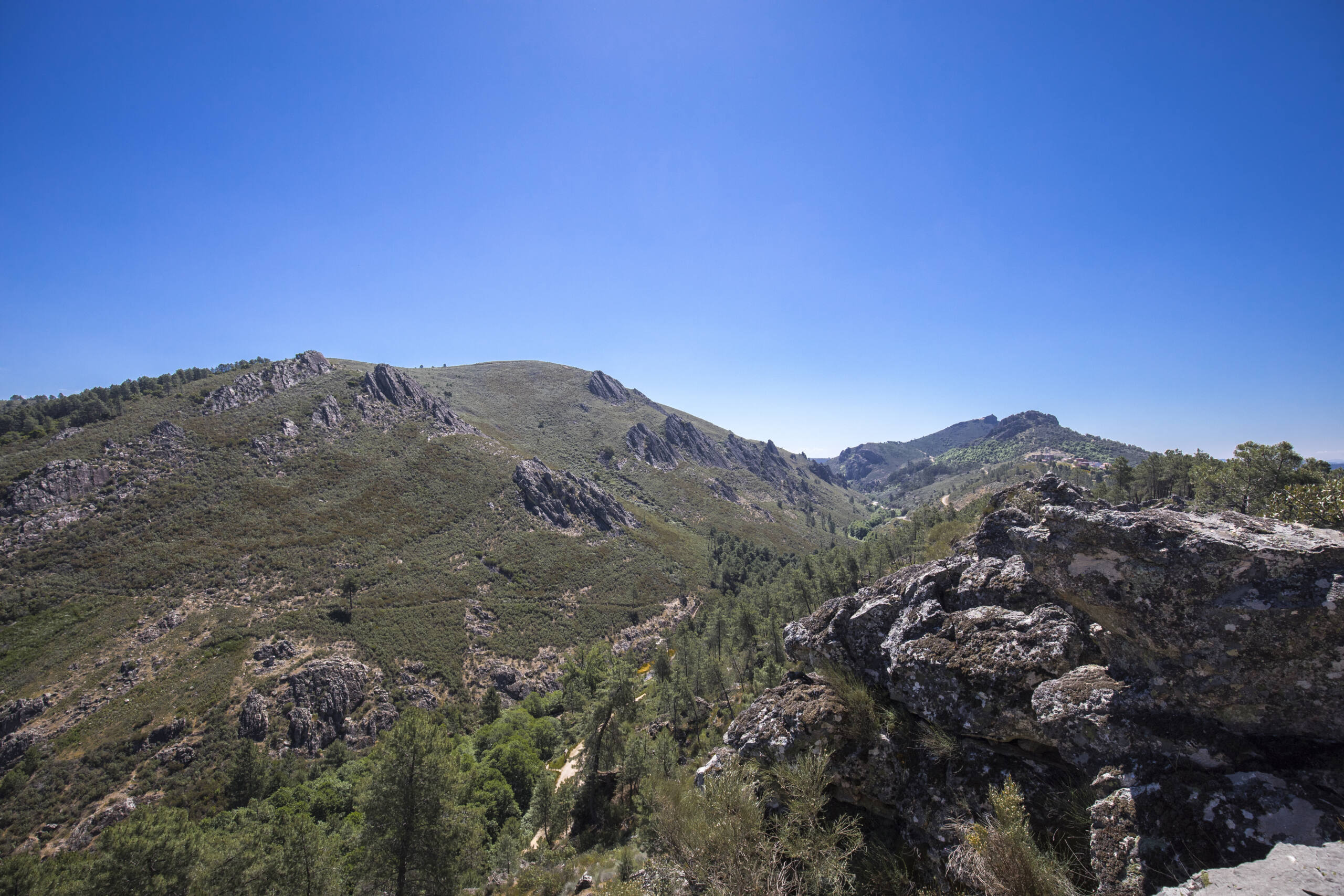
The vegetation consists of gallery or riparian forest along the riverbanks, featuring alders (*Alnus glutinosa*), willows (*Salix alba*), and poplars (*Populus alba*), alongside Portuguese laurels (*Prunus lusitanica*) and sweet chestnuts (*Castanea sativa*). Beyond the riverbanks, the dominant forest at higher elevations is composed of Pyrenean oaks (*Quercus pyrenaica*); however, near the dam and the gorge, the landscape shifts to Mediterranean-style vegetation, including cork oaks, holm oaks, and an abundance of scrub (such as rockroses, heathers, brooms, and butcher’s-broom).
FAUNA
Red deer and roe deer roam the riverbanks and hillsides of the area. Otters (*Lutra lutra*) are also present, thanks to the high water quality; however, the European mink (*Neovison vison*)—an invasive species capable of disrupting local biodiversity—has been spotted at the site known as “Charco de la Nutria” (Otter Pool).
The most common fish species include the Guadiana nase (*Pseudochondrostoma willkommi*), *Squalius alburnoides*, the Spanish spined loach (*Cobitis paludica*), the *Barbus comiza* barbel, and the arched-mouth nase (*Iberochondrostoma lemmingii*).
It is easy to spot the Mediterranean pond turtle (*Mauremys leprosa*), especially when they are basking on sunlit rocks for thermoregulation. The Schreiber’s green lizard (*Lacerta schreiberi*) and the grass snake (*Natrix natrix*) are also frequently seen.
Notable bird species that can be observed include the white-throated dipper, common kingfisher, black stork, black kite, Eurasian golden oriole, Eurasian sparrowhawk, tawny owl, and barn owl.
GEOLOGY
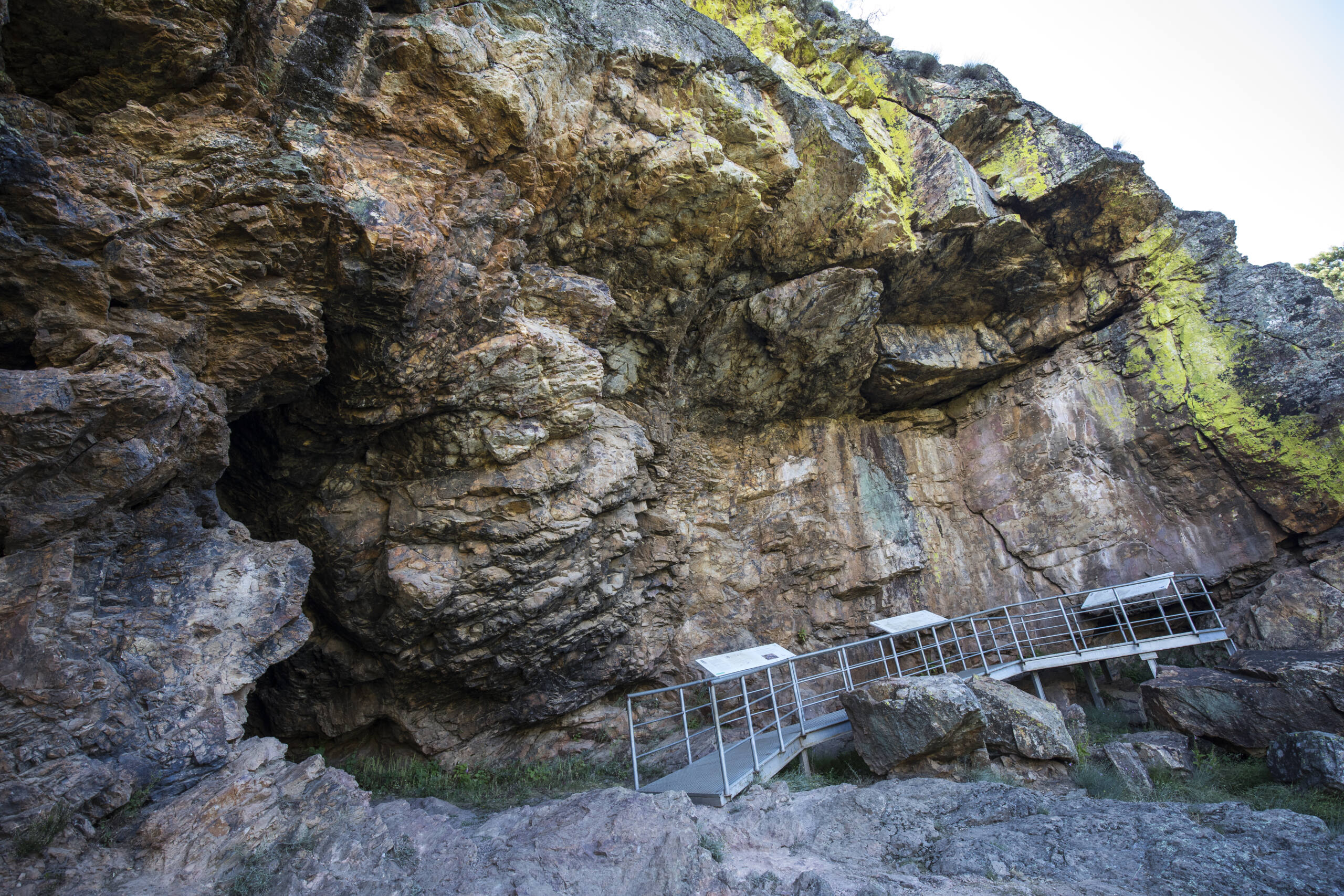
On the quartzite walls, one can observe numerous folds with narrow synclines and anticlines. It is also easy to identify traces of activity—or ichnofossils—most notably *Cruziana* (created by trilobites) and *Skolithos*.