FLORA
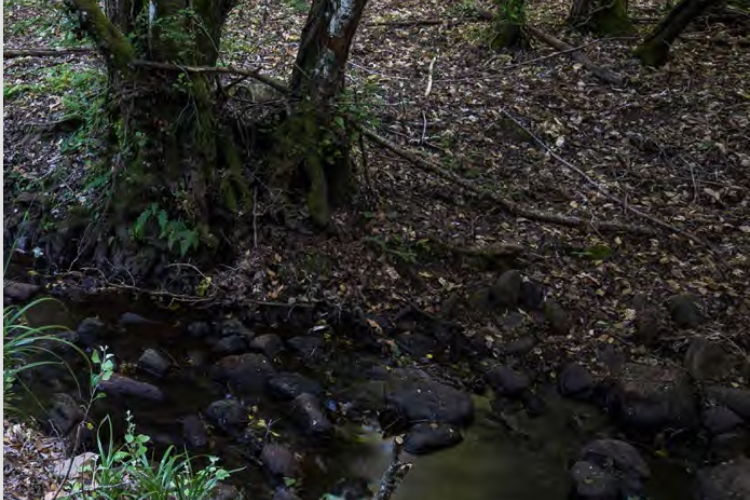
The vegetation surrounding this dam is among the most lush and dense in the entire Geopark; it is dominated by chestnut trees and Pyrenean oaks, which, during the autumn season, take on ochre, reddish, and golden hues as their leaves change color.
Of the 40-kilometer stretch leading to the confluence with the Guadiana River, the upper section is the richest in terms of both the abundance and diversity of plant species. During his visit in 1908, Miguel de Unamuno described it as follows:
“Everything that human art can offer us in Guadalupe is, without a doubt, truly beautiful; yet what Nature offers us there is even more beautiful. We ascended to the hermitage of Mirabel and descended through one of the thickest, most lush forests I have ever had the pleasure of experiencing. Never have I seen such gigantic and dense chestnut trees. There were also walnut trees, poplars, cork oaks, Portuguese oaks, holm oaks, ash trees, almond trees, and alders growing along the stream—all of it imbued with the fragrance of aromatic shrubs.” Long before this, Queen Isabella the Catholic—who visited Guadalupe frequently—referred to this area as “my paradise.”