FLORA
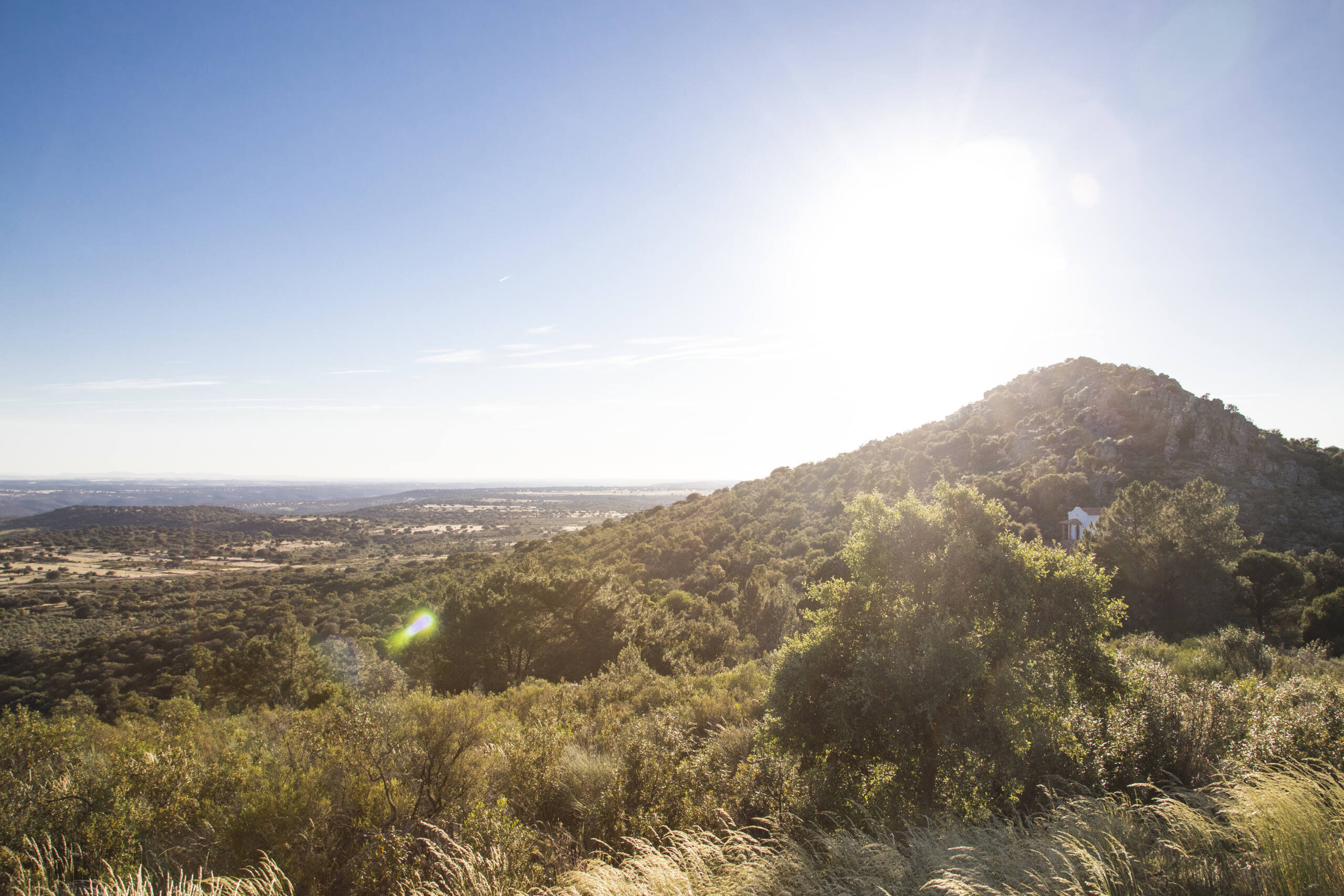
On these mountain slopes, the Mediterranean scrub and forest often become impenetrable, thick with rockroses, heathers, brooms, strawberry trees, terebinth, holm oaks, and cork oaks. On the plains, forests—thinned by human activity since time immemorial—have given way to an open landscape known as a *dehesa*, where scattered trees remain alongside grasslands that can be used for livestock grazing. Interspersed among the holm and cork oaks are lavender, gorse, and other species rich in essential oils and fragrances.
In certain significant areas within the localities of Higuera and Campillo de Deleitosa, the native forest and scrub have vanished, replaced by monospecific plantations of pine and eucalyptus.
FAUNA
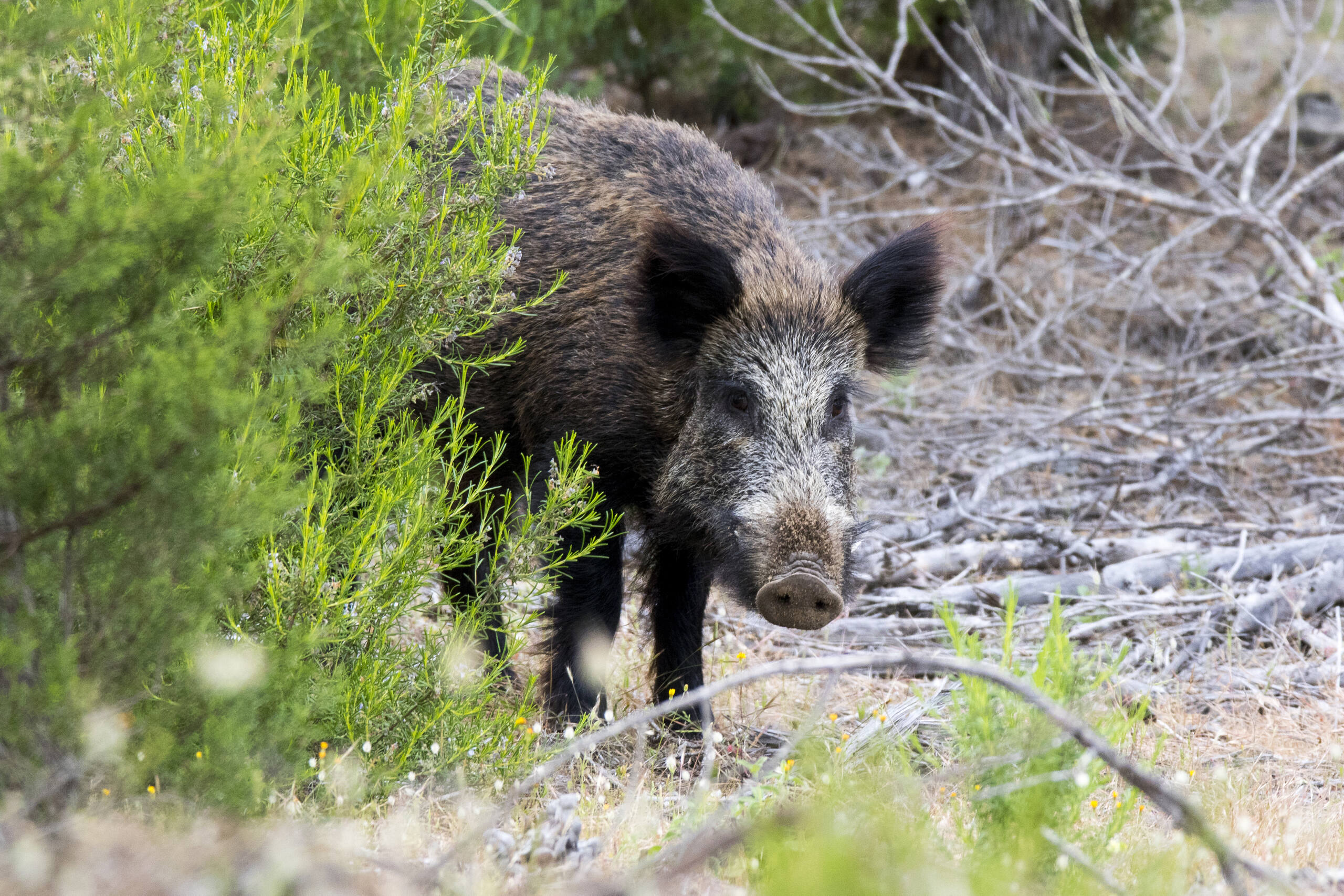
The fauna inhabiting the high, rocky ridges includes the griffon vulture (*Gyps fulvus*), Eurasian eagle-owl (*Bubo bubo*), Egyptian vulture (*Neophron percnopterus*), and peregrine falcon (*Falco peregrinus*). Within the scrubland, red deer (*Cervus elaphus*) and wild boar (*Sus scropha*) are frequently encountered. The *dehesas* (wooded pastures) serve as hunting grounds for various species of eagles—most notably the Iberian imperial eagle (*Aquila adalberti*), Bonelli’s eagle (*Aquila fasciata*), and short-toed snake eagle (*Circaetus gallicus*)—as well as for griffon vultures, cinereous vultures, and Egyptian vultures. The rhythmic calls of the hoopoe (*Upupa epops*) and the common cuckoo (*Cuculus canorus*) provide a musical backdrop to the *dehesa*.
GEOLOGY
From a geological perspective, the Monfragüe Syncline represents the northwestern extension of the Geopark. North of the town of Deleitosa lie the quartzite ridges of the Sierra de la Breña—a prime example of how the Hercynian and Alpine orogenies have folded and fractured the hard rock formations of the Las Villuercas region. Here, one can observe a parallel system of faults that have caused transverse displacements. These parallel fractures in the Sierra de la Breña are strike-slip (or transverse) faults, characterized by a vertical fault plane and horizontal movement of the rock blocks.
The slopes of these mountain ranges are covered in scree or slope debris, which has gradually encroached upon the vegetation. Further down the slopes, one finds an accumulation of various materials that form *rañas*—a distinctive geological formation that is widespread throughout Extremadura.