FLORA
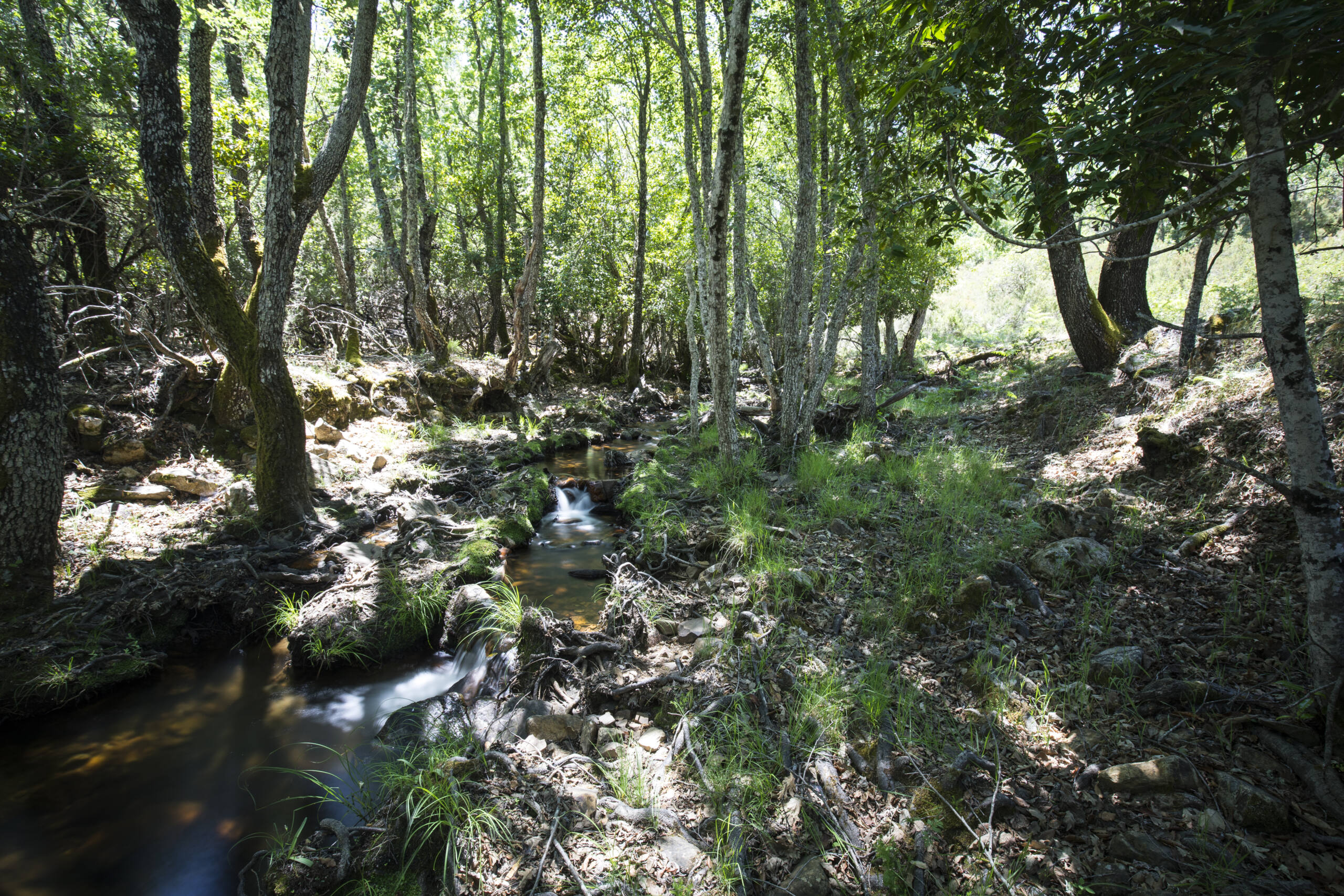
In this setting, one finds one of the most curious and rare types of vegetation in the Iberian Peninsula: the *lorera* (a forest of *Prunus lusitanica*) in the La Trucha gorge. A *lorera* is a woodland dominated by the *loro* (*Prunus lusitanica*)—a tree species considered a “relict.” During the Tertiary period, this species was widespread throughout the Mediterranean basin, which then experienced a warm, humid, subtropical climate—the conditions that gave rise to what are known as *laurisilva* (laurel) forests.
The common name for this species, *loro*, evolved from the term *laurel* (laurel/bay tree) and refers to the resemblance between its leaves and those of the well-known laurel, even though the two trees belong to entirely different botanical families. The Geopark is the only area in Extremadura where this unique tree thrives, with the La Trucha gorge standing out as a key site, home to approximately 1,500 individual specimens. Due to the extent and well-preserved state of this *lorera*, the site has been granted protected status under the category of “Unique Trees” (*Árboles Singulares*).
Other plant species found here include holly (*Ilex aquifolium*), laurustinus (*Viburnum tinus*), strawberry tree (*Arbutus unedo*), and tutsan (*Hypericum androsaemum*), alongside numerous alders, ash trees, and climbing plants such as ivy and wild grapevines.
FAUNA
As for the fauna, notable are the abundant red deer (*Cervus elaphus*), roe deer (*Capreolus capreolus*), and otters (*Lutra lutra*), as well as a rich variety of birdlife, including the griffon vulture (*Gyps fulvus*), Egyptian vulture (*Neophron percnopterus*), tawny owl (*Strix aluco*), golden oriole (*Oriolus oriolus*), and many other species of forest birds.
GEOLOGY
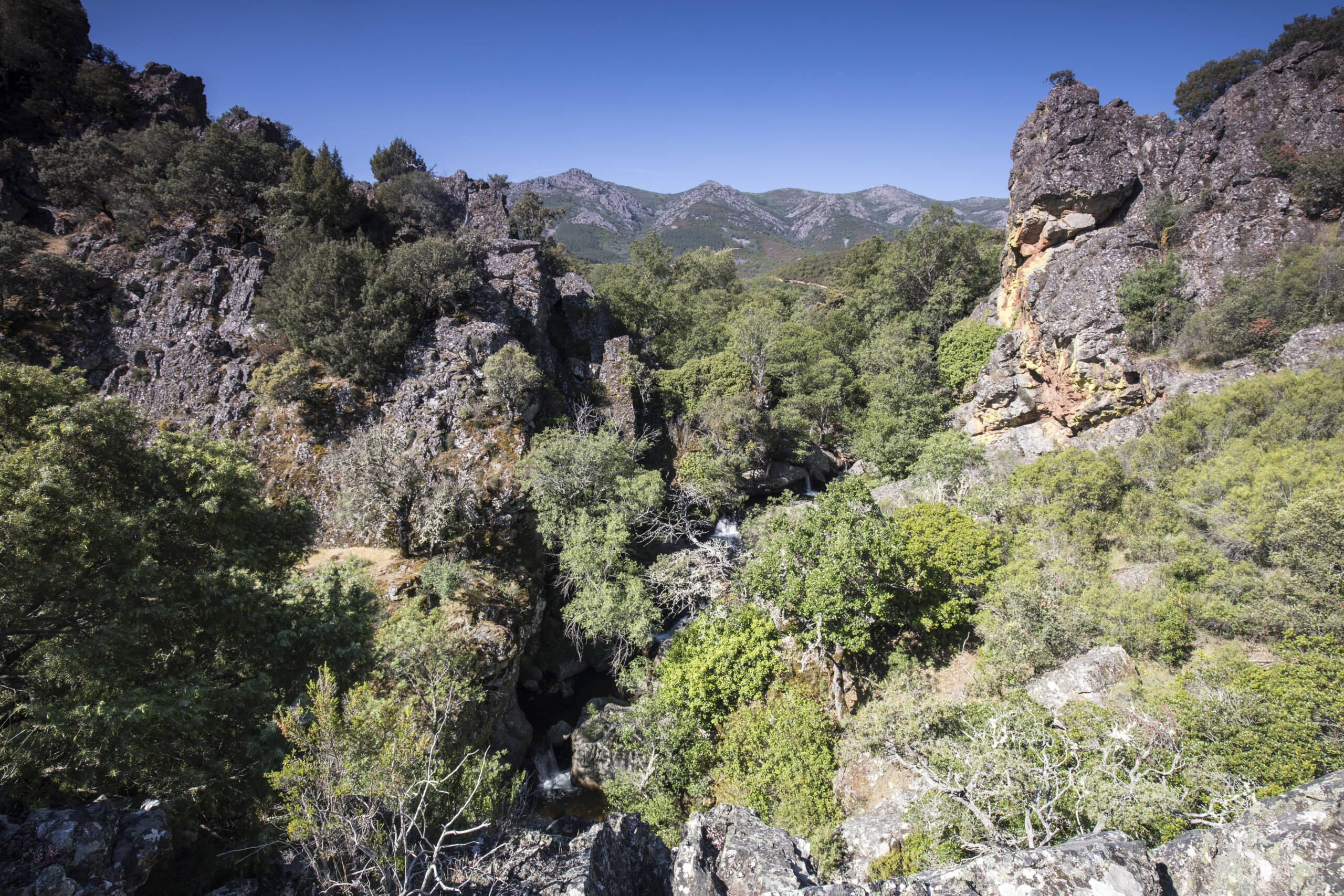
Within the succession of anticlines and synclines in the Geopark, the Guadarranque-Gualija syncline stands out for its immense size and spectacular nature; it spans approximately 70 km in length and 10 km in width, stretching from the Valdecañas reservoir (on the Tagus River) to the Cíjara reservoir (on the Guadiana River).
This syncline is exceptionally rich in paleontological remains. Fossil sites containing trilobites, brachiopods, mollusks, graptolites, and many other organisms are abundant here. A visit to the Fossil Interpretation Center in Navatrasierra is highly recommended, as it offers an excellent overview of the Geopark’s fossil fauna.
“El Charco de la Trucha” is located next to a prominent quartzite ridge in the core of the Guadarranque syncline, very close to a significant transverse fault. Due to erosion along the watercourse, it is possible to observe diamictite rocks—characterized by angular clasts embedded in a fine-grained (pelitic) matrix—which originated during the glaciation at the end of the Ordovician period, an event that triggered a mass extinction of species.