LOCATION AND ACCESS
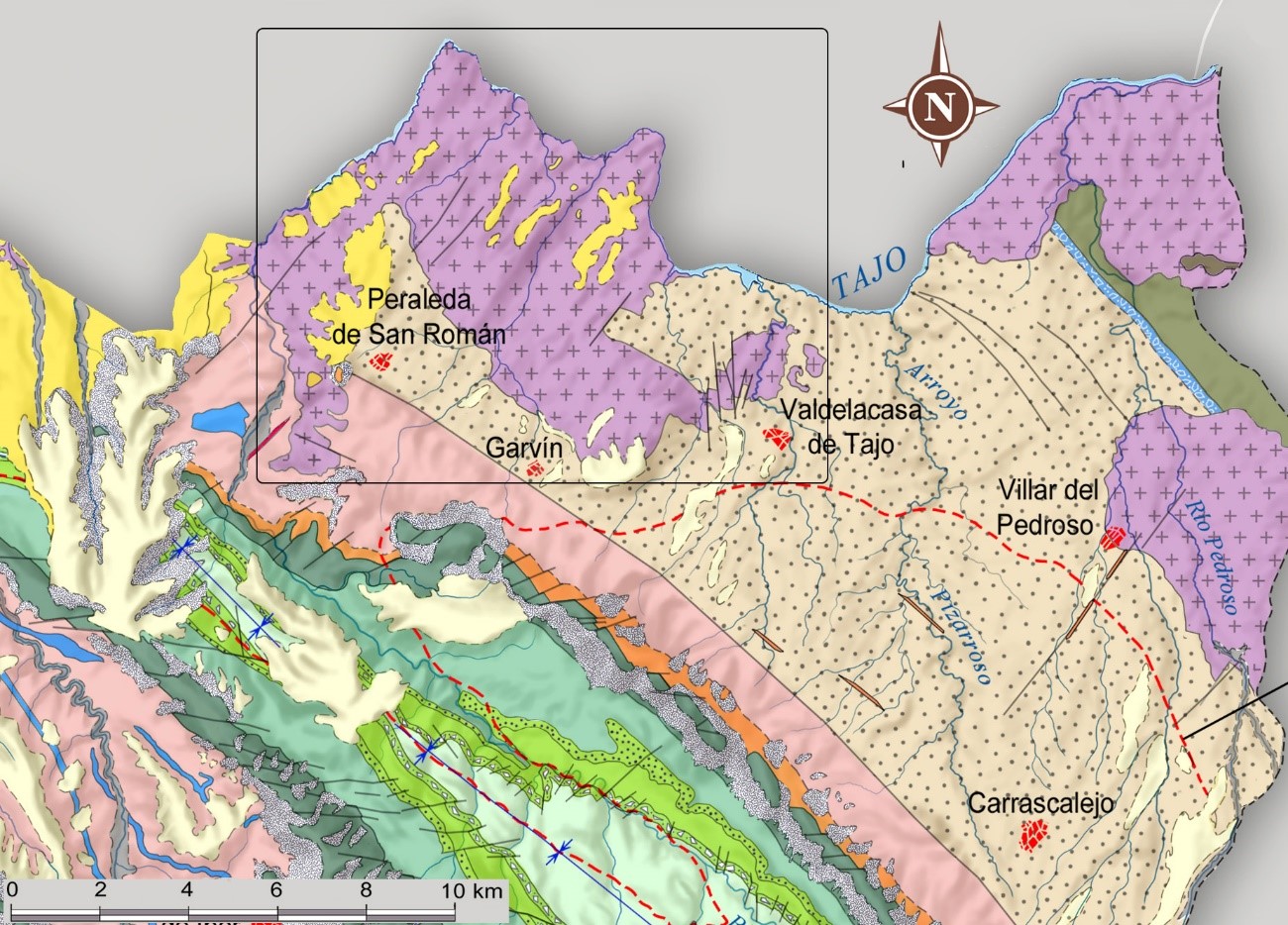
The Peraleda de San Román berrocal (rocky outcrop) stretches from the river Gualija river, in the west, to the vicinity of Valdelacasa de Tajo, in the east. The river Tagus flows through it between the Arab fortresses of Espejel and Alija, forming a deep canyon whose walls are almost covered by the waters of the Valdecañas reservoir. The so-called “Cancho Valdecastillo” is an enormous granite boulder located in the crag of the dehesa boyal (pasture for grazing) de Peraleda. It is reached by a winding path of about 5 km that leaves from the intersection of the Calvario de Peraleda in the direction of the Laguna Vieja (Old Lagoon).
ATTRACTIONS OF THE VISIT
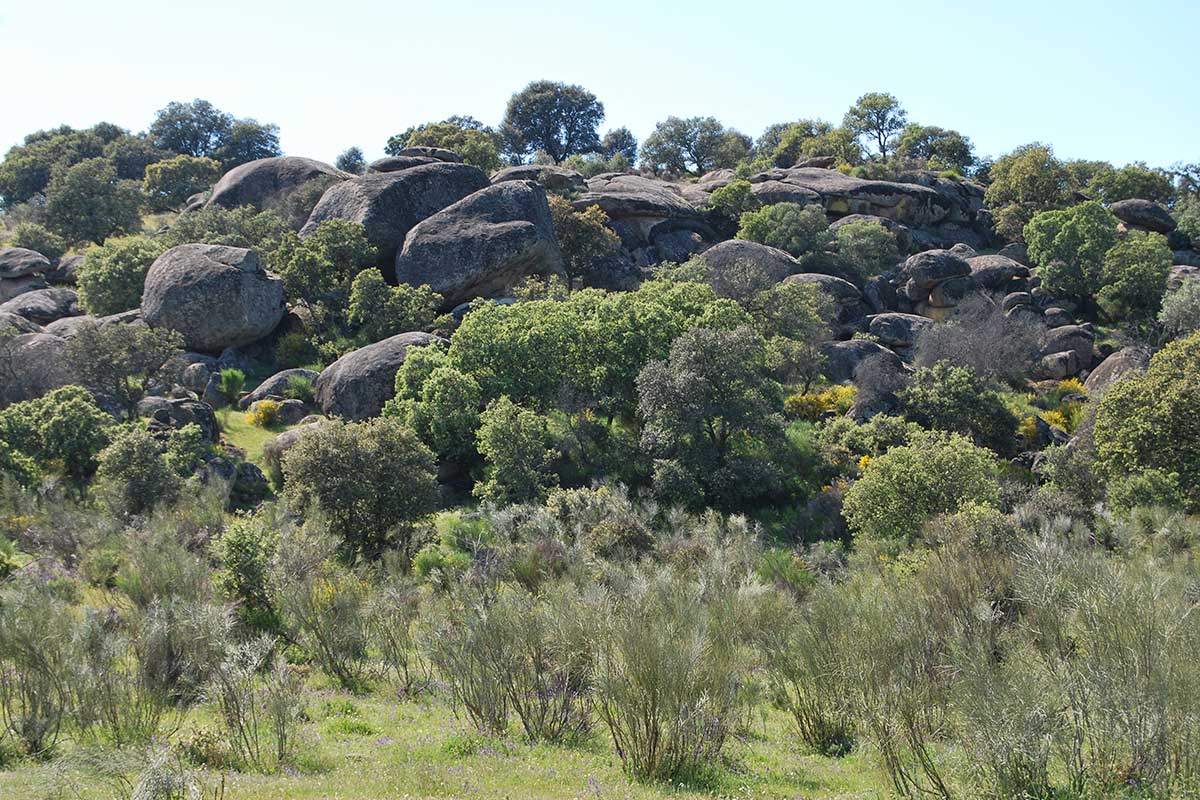
We will observe the curious erosive forms of the berrocal, caused by chemical weathering of the granitic rocks. We will also see the different fracture planes (joints) that have determined the formation of blocks of different sizes within these massive granitic rocks.
In particular, we will analyse, from an archaeological point of view, the “magical place” of Cancho Valdecastillo, in the lower part of which there is a large cavity that may have been a refuge for shepherds and perhaps a cave sanctuary for the first settlers of these lands, as attested by the remains of pottery and the numerous cave engravings found at its base: cup-shaped, anthropomorphic, zoomorphic, soliform…, witnesses to the passage of Neolithic and Chalcolithic peoples, and even Roman ones with a Latin inscription. With its characteristic shape of a huge scallop, or ship’s prow, it is not surprising that it has attracted religiousness and mystery since prehistoric times. Cancho Valdecastillo gives the crags of Peraleda de San Román a great archaeological value in addition to its curious craggy geomorphology.
GEOLOGICAL INTERPRETATION