Geoparque Mundial UNESCO

Nº19 – Raña de las Mesillas

Geoparque Villuercas > Nº19 – Raña de las Mesillas

LOCATION AND ACCESS

The raña de Las Mesillas stretches along both sides of the EX-118 road, to the north of the village of Castañar de Ibor, approximately between kilometres 43 and 47 of the aforementioned road at an altitude of between 670 and 650 metres.

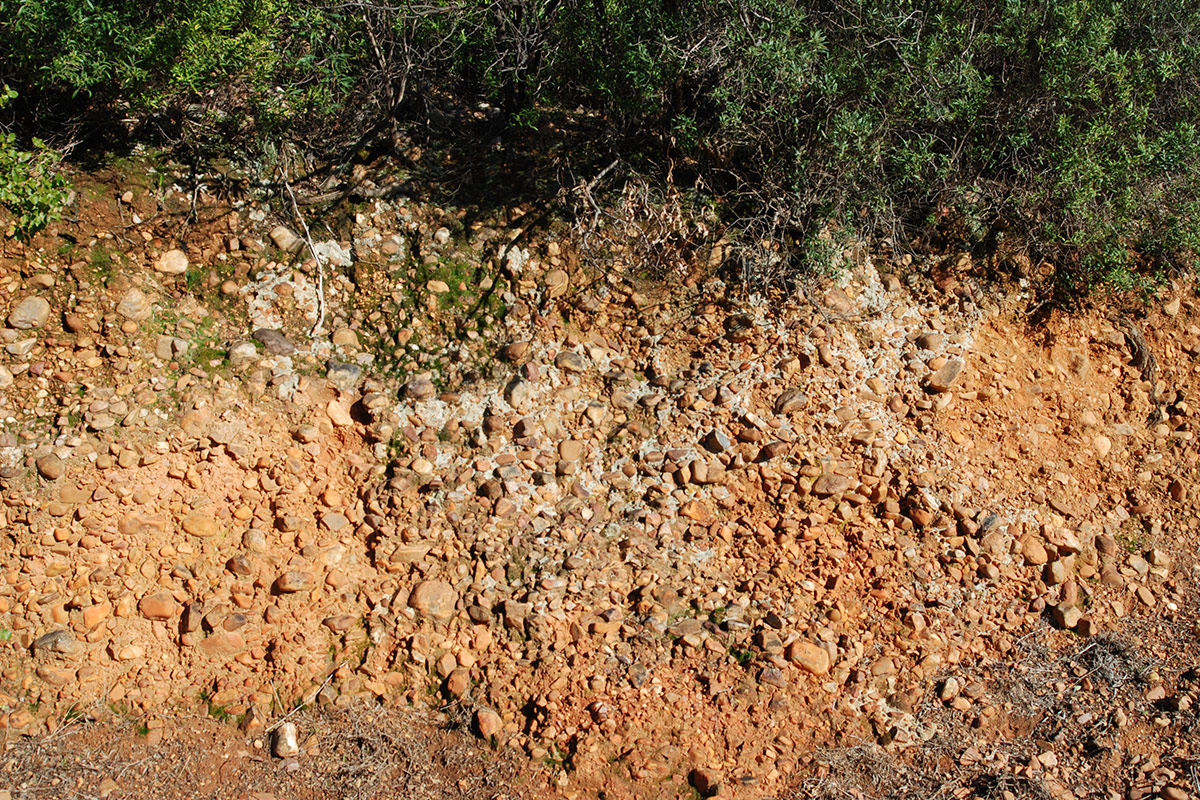
The raña can be seen in all directions from the sides of the road, and there are several exits along the way for parking vehicles. What we see here are reddish-coloured soils, with abundant quartzite and sandstone boulders, which have been used for rain-fed farming. Here you can see extensive olive groves, but you can also find vines and forest crops in other parts of the Geopark.

ATTRACTIONS OF THE VISIT

Observe the geomorphology of the deposits of the raña and its flat or almost flat surface. To contemplate the different detrital materials that constitute them, as well as to be able to determine some specific characteristics in them, such as sphericity, hardness, signs of hydromorphism, patinas, etc.

These are places where you can learn about traditional work such as the care of olive trees and the production of high quality olive oil, our liquid gold.

GEOLOGICAL INTERPRETATION

The rañas are wide plains of sedimentary origin, in the form of a plateau that culminated in endorheic Cenozoic deposits. Due to the great encasement of the current fluvial network that is eroding them, they are currently attached to the important reliefs that formed the margins of the basin. Their materials are made up of fanglomerates, with little or no cementation, which are arranged as immense alluvial fans or tongue-shaped “washes” (for a description of their genesis, see Geosite 5, rañas de Cañamero). These rañas form part of a group within the Tagus Basin that are characterised by a higher elevation compared to the Guadiana Basin, some of them reaching heights of more than 700 metres.

If we look at a cross section (for example, in the road trenches) we can see that these fanglomerates are made up of pebbles, sometimes blocks, generally of quartzite, subrounded and enclosed within a reddish-yellowish clayey-sandy matrix. They are several metres thick, reaching up to ten metres thickness.